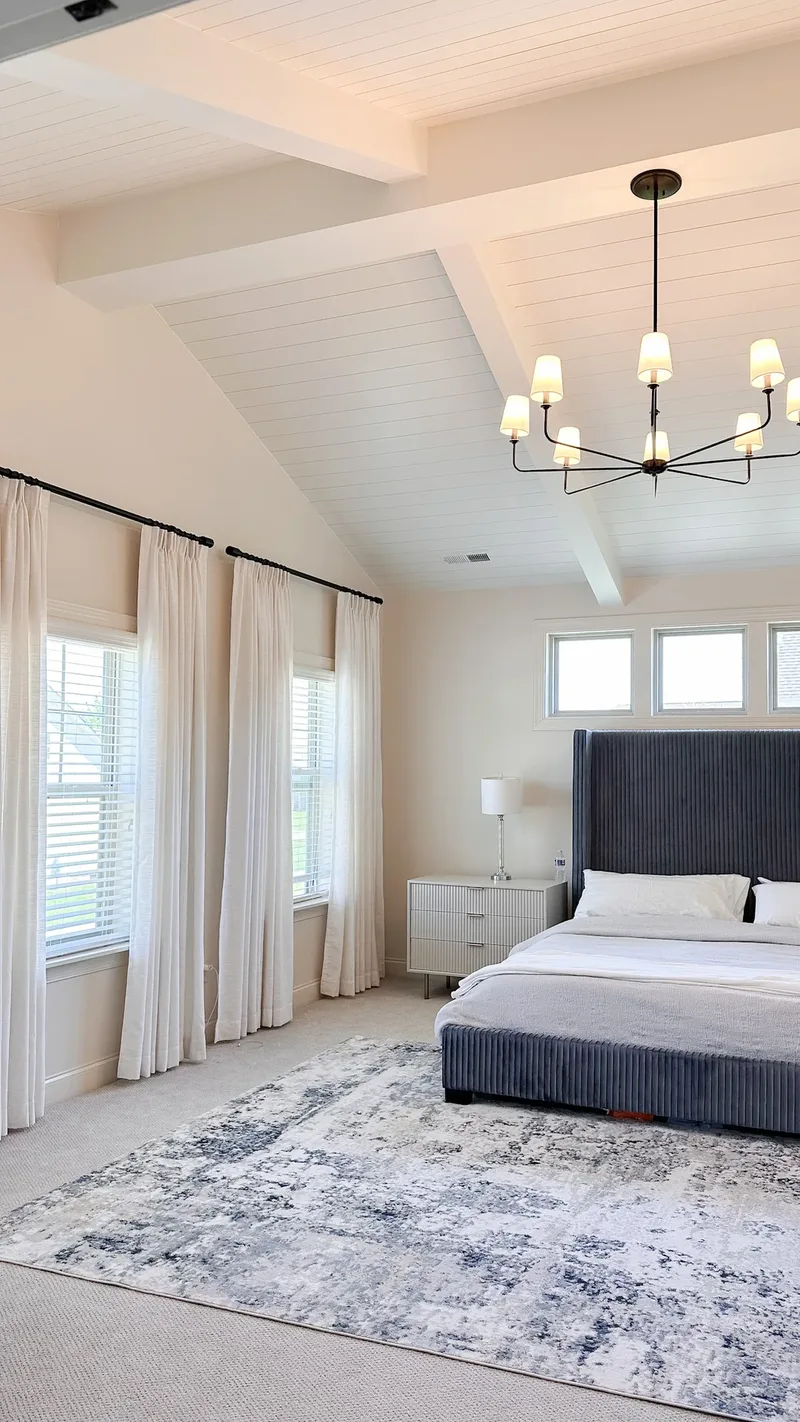
Bedroom Interior Design · Charlotte, North Carolina

04 · Furniture & room design
Someone else quotes it, orders it, tracks it and receives it—so the room gets finished instead of half-bought.

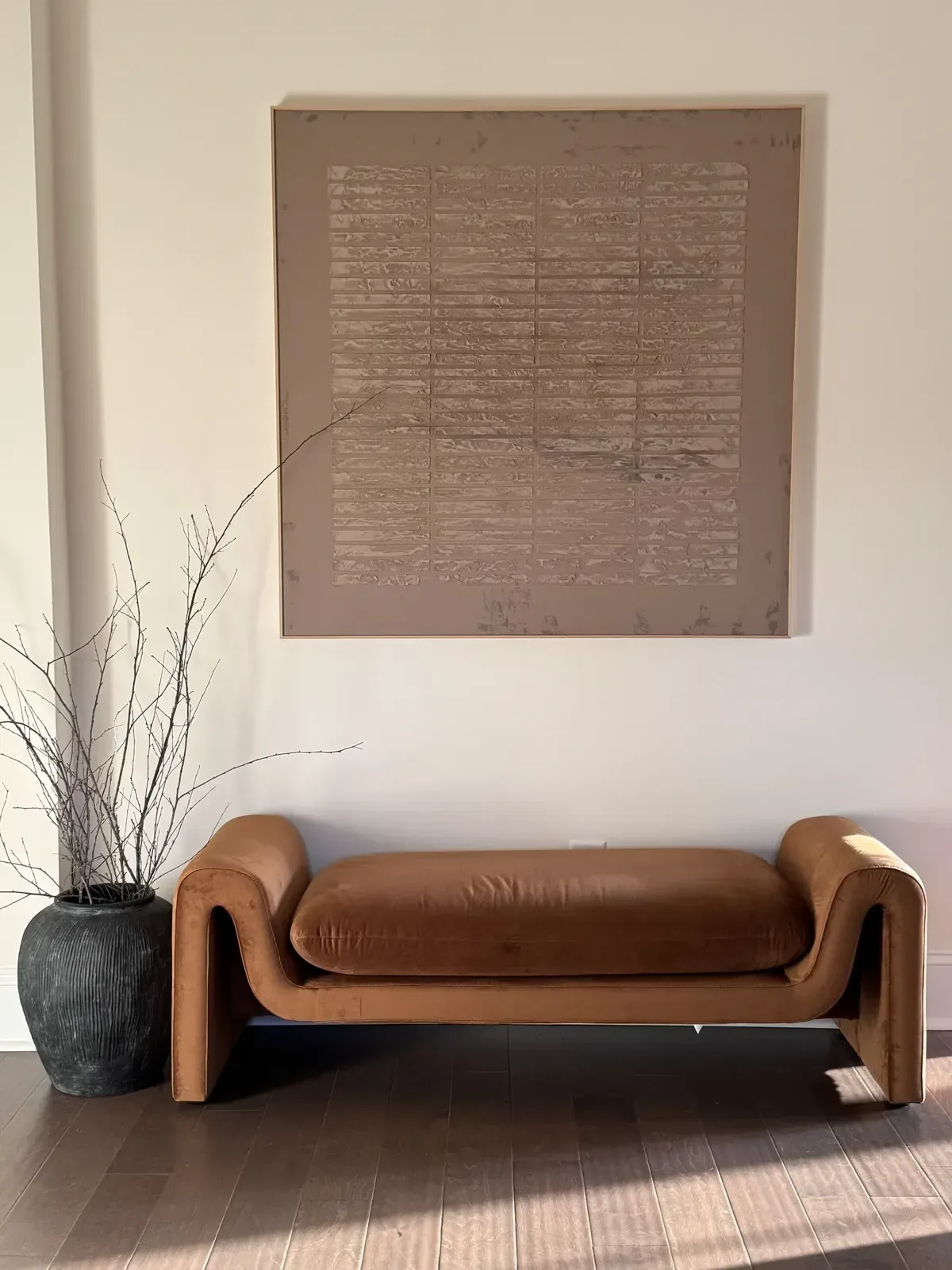 Furniture & Room Design
What it includes
Furniture sourcing is the part of a project that begins after the decisions are made. You know the sofa you want, the rug size the room needs, the finish on the dining chairs. What is left is quoting it, ordering it from six unrelated companies, and following every one of those orders until the pieces are standing in your rooms. That work is what I take over.
The failure mode it prevents is the half-finished room. Pieces bought one at a time, months apart, each reasonable on its own and slightly wrong beside the others—a rug that floats, a sofa two inches too deep for the walkway, a wood tone that reads orange next to your floor. The other version is the room that is fully paid for and still empty, because the one piece everything else was scaled around has been backordered twice and nobody called to tell you.
This is not shopping on your behalf. Every piece is checked against your measured room and against the pieces around it before it is ever quoted, and nothing is ordered until you have seen the whole list and the whole number. After that, the tracking belongs to me: acknowledgments, lead times, freight, receiving, damaged cartons, redeliveries. You hear from me when something needs your decision, not when a vendor needs chasing.
Who it suits
You already have a design—from a consultation, from your builder, or from your own long research—and no time to execute it.
A new build or renovation with a move-in date approaching and rooms that are still empty.
One room has been half-bought for a year, and every new purchase makes the rest harder to choose.
You cannot be at the house for deliveries: a second home, a relocation, or a house you are furnishing from another state.
Furniture sourcing most often follows Full-Service Interior Design, which produces the plan it carries out, and runs alongside a paint consultation so the walls are settled before the first delivery arrives.
How it runs
We go through the rooms together, in person in the Charlotte area or on video anywhere else. I measure, photograph and note the doorways, stair turns and ceiling heights that decide what can physically get into the house, and we go through what you already own and want to keep.
You receive a specified list—every piece with its dimensions, material, finish and vendor—laid out on a plan of the room so you can see how it sits and how much floor is left to walk on. Alongside it is one consolidated cost, freight and receiving included. You approve, adjust or cut before anything is bought.
Orders go out, acknowledgments come back, and lead times start running. This is the longest part of the project and the part you should notice least. You get a written status list on a regular schedule, and a call only when a vendor changes something—a discontinued fabric, a date that moves—and a decision is genuinely yours to make.
Deliveries are scheduled, received and inspected, and anything wrong is claimed inside the window rather than after it. On install day the pieces are placed, the rug is laid, the art is hung and the room is styled with what you already own worked back in. You walk into a finished room, not a floor of cartons.
From recent work
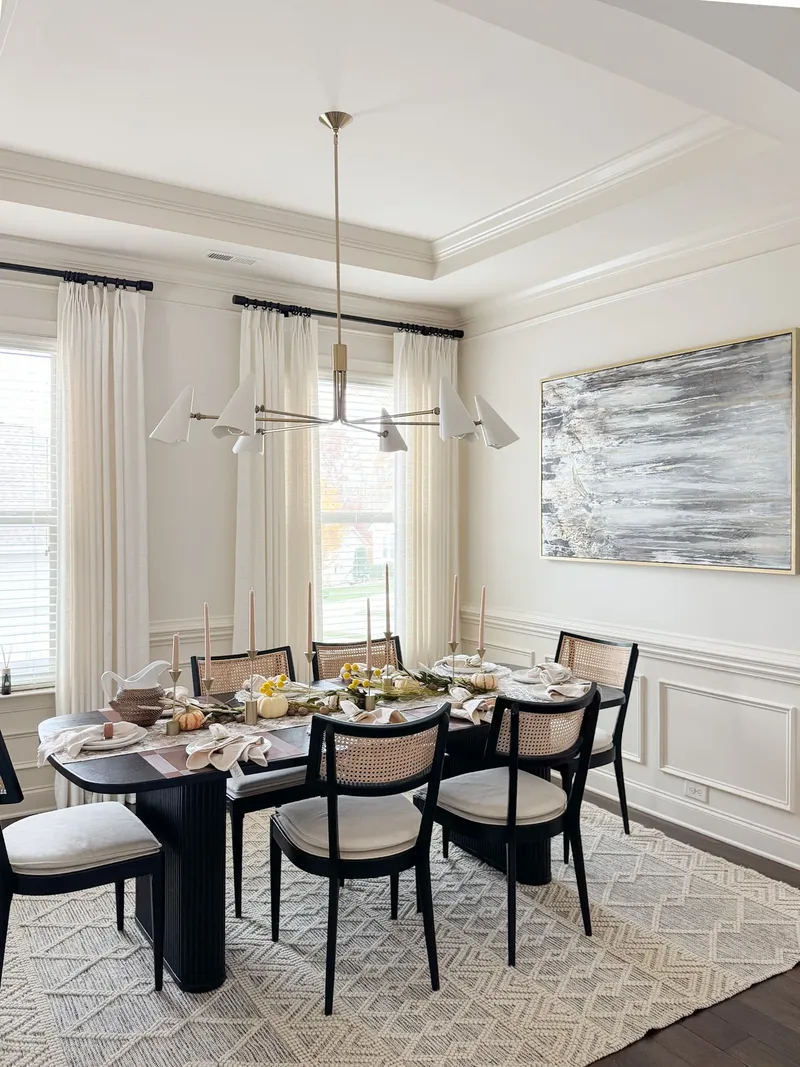
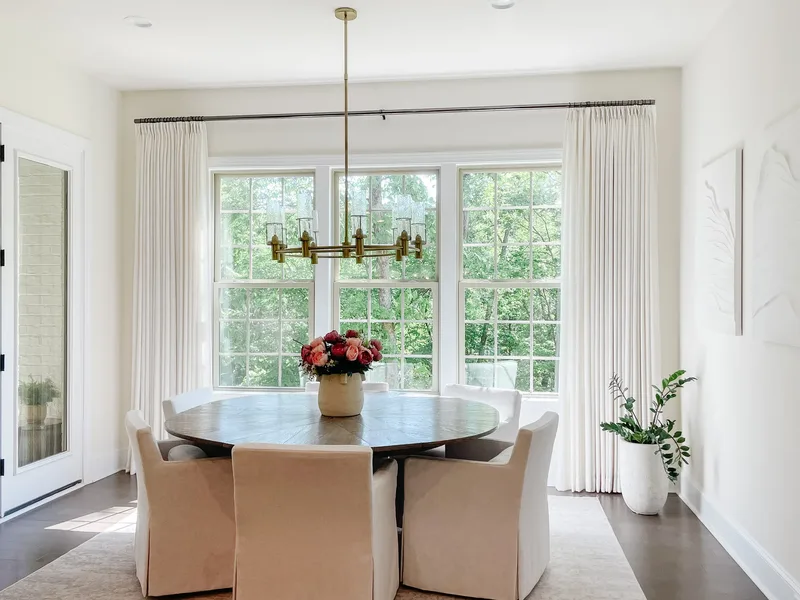
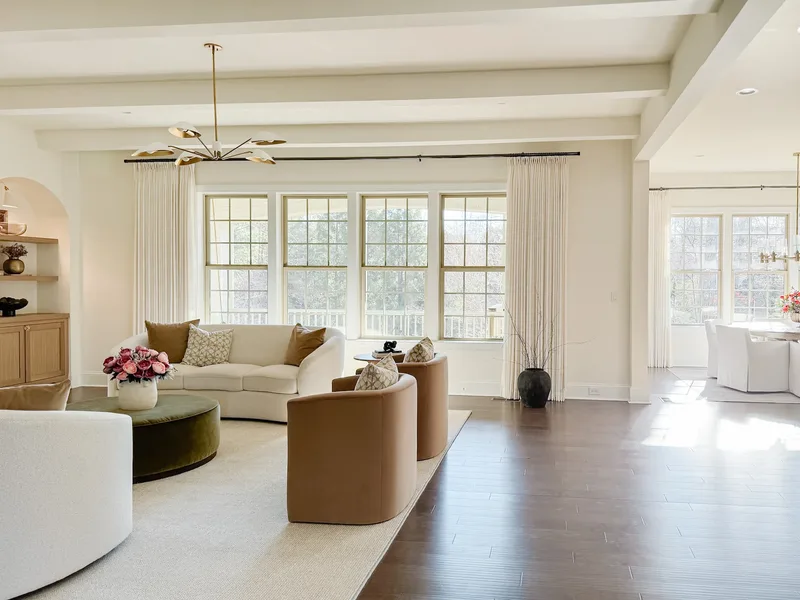
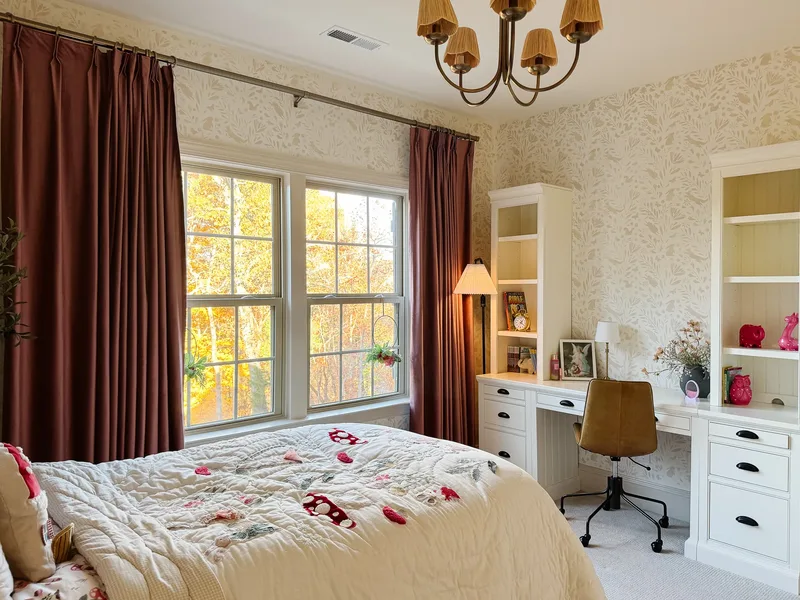
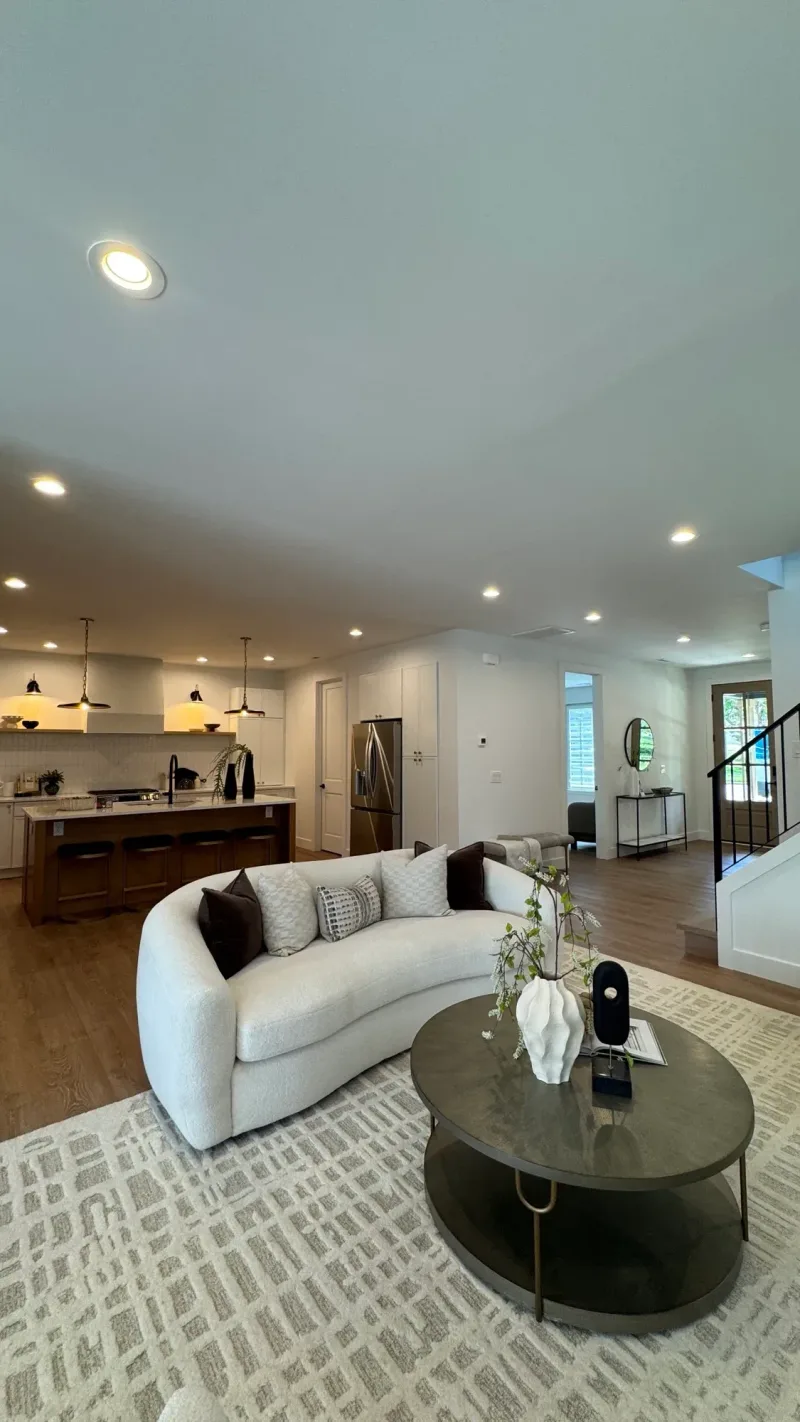

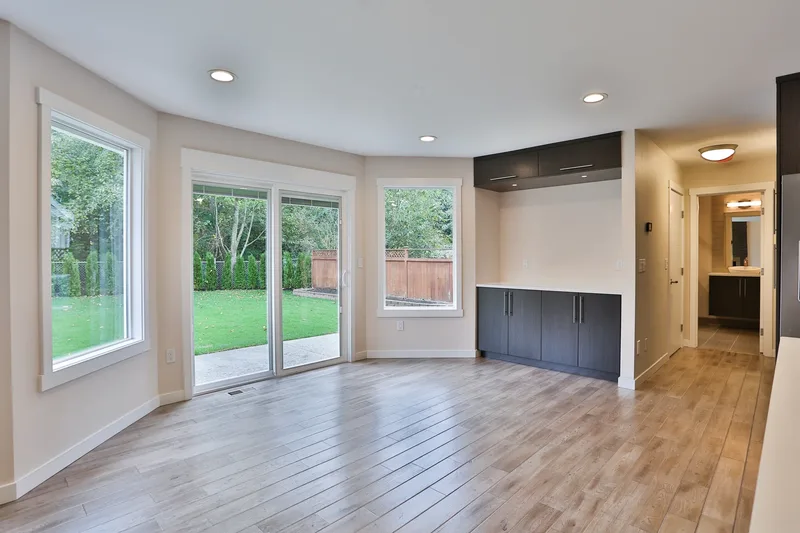
What clients say
“I can’t recommend Tanya enough. We worked with her during our home build, and she was absolutely incredible from start to finish. She’s not only patient, but truly listens and understands your vision, which made such a difference for us. One of the most overwhelming parts of building our home was choosing lighting for every single room, but Tanya guided us through it so thoughtfully. She has an amazing eye, gave us practical advice, and helped us make decisions with confidence. What could have been a stressful process actually felt easy with her help. I’m so grateful for her guidance, expertise, and all the little tips she shared along the way. She made a huge impact on our home, and I would work with her again in a heartbeat.
“Tatyana has been very helpful in the design of our home. She has assisted with everything from choosing lighting/ furniture, prioritization of projects, choosing paint colors, and facilitating shipments and deliveries. The whole process felt overwhelming until we got help from Tatyana. Pricing is reasonable and communication is quick.
“Tatyana was absolutely amazing to work with! She helped me design both our living room and bedroom, and completely transformed the feel of our home. She made choosing paint colors, furniture, and layout so easy — I would have been so overwhelmed without her guidance! If you’re in Waxhaw or Charlotte and need help pulling your home together, I highly recommend booking with Your Designer BFF!
“I recently had the pleasure of working with Tatyana, who came in to advise me on the paint color for my media room and offer a few suggestions on furniture placement and finishing touches. I’m extremely particular about colors, but Tatyana really knew her stuff! She was able to point me in the right direction with confidence, and I couldn’t be happier with the result. The room looks stunning, and not only does it function better, but it feels complete and more polished. Tatyana’s understanding of design, especially when it comes to color and functionality, is impressive. I’m already looking forward to hiring her for future projects. If you’re looking for someone who truly understands how to bring a space together, I highly recommend her!
“Tatyana was very professional and provided excellent service! She was prompt with her visits, and her responses to texts. She had great ideas and helped me think outside the box. She also had many trades people she could recommend to me for work that needed to be done. I would highly recommend her.
“Tanya was incredible to work with for our home remodel! We booked a 1-hour in-home consultation, and she helped us pick the perfect paint color, light fixtures, and cabinet handles to match our new flooring and granite. She is super smart, knowledgeable, and so easy to work with. Our home looks fantastic and completely cohesive now highly recommend her!
“We’ve collaborated with Tatyana on several projects to assist homeowners in selecting the ideal colors for their homes and creating a harmonious living environment. Tatyana is exceptionally easy to work with and genuinely a pleasure to collaborate with. From our initial, straightforward communication to our absolute professionalism in the realm of colors, Tatyana consistently exceeds our expectations. We highly recommend working with Tatyana!
“Tatyana was able to help us chose paint colors for 4 rooms in our house very quickly. She picked up on our style right away and was able to translate that into the right look. She was very professional and had recommendations for painters as well.
Before you book
It depends almost entirely on what you choose, and you hear the trade-off at selection time rather than after you have committed. In-stock pieces ship in weeks. Made-to-order upholstery is commonly quoted in months, and imported case goods that travel by container run longer still, before port and freight time. If you have a fixed date—a move-in, a family holiday, a baby—say so at the start, and the plan gets built around what can realistically arrive by then, with in-stock alternates specified wherever the timeline is tight.
Yes, and it usually makes the room better. Tell me what you actually like or cannot replace—an inherited chest, a dining table that seats everyone, a rug you are not giving up—and the plan is built around them: scale, wood tone, and what has to sit next to them without competing. Some pieces are worth reupholstering instead of replacing, and I will tell you when that is the case, even though it is the smaller order.
You can phase it, and it depends on how you phase. Splitting by room generally works. Splitting one room—sofa now, chairs next year—is where phasing goes wrong: fabrics are discontinued, finishes shift between dye lots, prices move, and the pieces meant to relate to each other stop doing so. When the budget needs staging, we stage it room by room and specify the whole plan up front, so the later orders still agree with the earlier ones.
It gets handled before it becomes your problem. Deliveries are inspected on arrival, because carriers and vendors allow only a short window to report concealed damage, and a claim filed after that window closes is a much harder conversation. If a piece is damaged, wrong, or quietly substituted, I file the claim, chase the replacement and reschedule the delivery. You are told what happened. You do not spend the week on the phone about it.
You need decisions, not necessarily a design from me. A plan from a consultation, from your builder, or from your own long research all work — what does not work is a list of things you are still deciding between.
Trade sources alongside the retail ones, chosen for the piece rather than the vendor. Quotes are gathered and compared for you, and the comparison is part of what you see rather than something that happens out of sight.
Yes. One consolidated budget is approved before a single order is placed, so the number you agree to is the number for the room, not a running total that grows.
Not you, which is most of the point. Freight is received and inspected on arrival, because carriers and vendors allow a short window for damage claims and that window closes quietly.
It is inspected before it reaches your room, and a damage or mis-ship claim is opened while the claim is still allowed. Vendor terms vary, so what is possible differs by piece — but the problem starts as mine rather than yours.
Yes. They are usually the pieces with the longest lead times and the most specification detail, which is exactly why they get left half-decided when a room is bought piecemeal.
Yes, and a real number works better than a vague one. The budget does not change how the room is planned — it changes what gets specified into it, and which pieces are worth the weight.
It is a scheduling problem rather than a design one, and it is better raised early. Delivery windows, lift bookings and access routes are coordinated with your builder or building as part of the install.
Other ways to work together
 01
01From the first idea to the final detail, I manage the design process so you can enjoy a home that feels cohesive, finished, and completely yours.
Available exclusively in the Charlotte area.
Explore Full-Service Design 02
02Make every permanent decision with confidence before construction begins—from cabinetry and tile to lighting and finishes.
Explore Kitchen & Bath Design 03
03I’ll help you choose colors that complement your lighting, finishes, and surroundings—so your home finally feels cohesive from one space to the next.
Available in person in the Charlotte area or virtually nationwide.
Explore Paint Consultations 04
04During a focused consultation, we’ll work through the decisions keeping you stuck and create a clear direction you can confidently follow.
Available in person in the Charlotte area or virtually nationwide.
Explore Design Consultations 05
05Four ways to have Christmas done for you, from the tree alone to the whole house and the porch.
Everyone is quoted after I’ve seen the rooms.
Explore Seasonal Styling
Let’s make your next decision the easy one
Tell me what you’re working on, and let’s choose the right next step together.
Let’s talk about your home
Ready to share the details? Complete the project inquiry form, and I’ll recommend the best next step.
Prefer to talk first? Book a free 15-minute call to ask about my services and see which option fits your project.

Not sure which service you need?
Book a complimentary 15-minute Project Fit Call to briefly share what you’re working on, ask questions about my services, and determine which option best fits your project.
Book a Free 15-Minute CallYou only need to choose one—submit the form or book a call.
From order to install day
The gap between a finished design and a finished room is about two hundred emails. Quotes from six vendors that arrive in six different formats. An acknowledgment that quietly changes a lead time from ten weeks to nineteen. A freight company that wants a four-hour window on a Tuesday. A sofa that arrives with a two-inch tear along the back rail, which you have four days to report and won't notice for three weeks because it's facing the wall.
None of that is design work. It's procurement, and it's the reason so many rooms sit at eighty percent finished for a year. This service is someone owning that gap end to end — quoting, ordering, tracking, receiving, inspecting, claiming, scheduling and placing — so the room gets finished rather than half-bought. Here's what that actually involves.
You need decisions, not necessarily a design from me. A plan from a consultation, a scheme from your builder, or your own long research all work. What doesn't work is a list of things you're still choosing between, because every quote and every lead time is attached to a specific item in a specific finish.
If the decisions aren't made yet, that's the design service — and it produces exactly the specification this one runs on. If you're close but stuck on a few pieces, an hour on a virtual consultation usually settles them.
Before anything is quoted, every piece gets checked against the room: overall dimensions, walkways, how doors swing, and whether the thing can physically get into the house. That last one is not a joke. A 96-inch sofa with a fixed frame does not go up a turned staircase in a 1920s bungalow, and finding out on delivery day is expensive.
The measurements that matter for access are:
Knock-down frames and sectionals exist for exactly these situations, and specifying one at the start costs nothing.
| Piece | What gets checked | Common miss |
|---|---|---|
| Sofa / sectional | Width, depth, seat height, arm height, leg style | Seat depth — a 24-inch seat suits a tall household, a 21-inch one doesn't |
| Dining table | Length, width, apron depth, leg position | Apron depth against chair arm height; the chairs won't tuck |
| Rug | Size against the seating group, pile height | Pile height under a door that swings over it |
| Bed | Overall footprint with the frame, headboard height | Headboard height against a window sill behind it |
| Case goods | Depth against the walkway, drawer clearance | Drawer extension into a walkway that's already tight |
| Lighting | Fixture diameter, drop, canopy size | Drop length ordered short, with no field-shortenable chain |
Trade sources alongside retail ones, chosen for the piece rather than the vendor. Trade accounts give access to lines that aren't sold direct and to pricing that isn't public, but the point isn't the discount — it's the range. A room specified entirely from what's available on two retail websites looks like it was.
Quotes are gathered and compared for you, and the comparison is part of what you see rather than something that happens out of sight. Where two options are genuinely close, you get both with a recommendation and a reason.
Everything is consolidated into a single budget — every piece, freight, and any workroom labor — and it's approved before a single order is placed. The number you agree to is the number for the room, not a running total that grows every time something ships.
A real budget figure works far better than a vague one. It doesn't change how the room is planned; it changes what gets specified into it and which pieces are worth the weight. If the total comes back higher than you want, we cut deliberately — usually by phasing the pieces that can wait rather than by downgrading everything evenly, because a room of uniformly cheaper things reads cheaper than a room with three good pieces and three empty spots.
The pieces worth the money are the ones you touch: seating, the mattress, the dining chairs. The pieces to economize on are the ones you look at from across the room.
An order isn't confirmed when it's placed. It's confirmed when the acknowledgment comes back, and the acknowledgment is where the real lead time appears — often different from what the quote said. That document gets read every time, because a nineteen-week acknowledgment on the sofa changes the install date for the entire room.
Rough expectations:
Long-lead items go on order first, even though they're the frightening ones, because everything else can catch up.
Fabric is the most common cause of a silent delay. An upholstery order doesn't enter the queue until the fabric arrives at the workroom, so a backordered fabric stalls a piece without the vendor necessarily telling anyone. That's why status gets checked rather than waited for.
This is the part people most want to hand over, and rightly.
Furniture ships freight, not parcel. That means a delivery appointment, a truck that may or may not have a lift gate, and — for most carriers — a very short window in which concealed damage can be reported. Sign a delivery receipt clean and you have, in practice, accepted the goods.
So deliveries are received and inspected on arrival, before anything reaches your room:
Damage or a mis-ship is documented and claimed while the claim is still allowed. Vendor terms vary, so what's possible differs by piece — but the problem starts as mine rather than yours.
The practical benefit is that your house doesn't become a warehouse. Nothing arrives until it's whole and until the room is ready for it.
These have the longest lead times and the most specification detail, which is precisely why they're the pieces most often abandoned when a room is bought piecemeal.
Drapery alone requires:
Get the length wrong by two inches and it reads as an error from across the room. The curtain guide covers room-by-room choices, and the pinch pleat piece explains the header styles before you're asked to choose one.
For rugs, the two decisions that matter most are size — front legs on the rug at minimum, all legs on if the room allows — and construction. Hand-knotted wool lasts decades and costs accordingly; a good machine-made wool is a sensible choice in a room with children and dogs.
Install day is a scheduled event, not a series of drop-offs. Deliveries are coordinated so pieces arrive in the right order — rugs before furniture, large upholstery before case goods, art last. Building restrictions, elevator bookings and access routes are arranged in advance with your builder or your building's management.
On the day:
Packaging and debris leave with us.
If your building has a loading dock window or a certificate-of-insurance requirement, raise it early. It's a scheduling problem rather than a design one, and it's a much smaller problem in week two than in week twenty.
Discontinuations. Lines get dropped mid-project. You should hear it at selection time with an alternate specified beside it, not after you've committed.
Dye lots. Fabric and rug batches vary. Ordering everything for one room at once, from one lot, avoids a mismatch you'll notice for years.
Back-orders that move. A date can slip twice. When it does, the honest answer is the new date and what it changes downstream — not reassurance.
Custom is final. A made-to-order piece in your fabric is not returnable. That's why approval happens on the specification, with the fabric memo in your hand, before the order goes in.
Upholstery is where the money goes and where the differences are hardest to see in a photograph. These are the things a specification names, and what each one actually means for how long the piece lasts.
The frame. Kiln-dried hardwood is the standard worth paying for; it resists the seasonal movement that loosens joints. Corner blocks that are glued and screwed rather than stapled are the tell for a frame built to be reupholstered later.
The suspension. Eight-way hand-tied springs are the traditional benchmark and are genuinely comfortable, but a well-engineered sinuous spring system is perfectly good and considerably lighter. Webbing alone belongs on occasional pieces, not on the sofa you sit in every night.
The cushion fill. Foam core wrapped in down gives you the shape of foam with the softness of down and needs regular fluffing. All-down is luxurious and requires constant maintenance. High-resilience foam holds its shape longest and reads firmest. There is no right answer — but there is a right answer for how your household actually sits, and it's worth saying out loud before ordering.
The fabric. Two numbers matter. Double rubs measure abrasion resistance — 15,000 is fine for a formal room, 30,000+ for a family sofa. And the cleaning code: W (water-based cleaners), S (solvent only), WS (either), X (vacuum only, no liquid). A beautiful S-code fabric on a sofa where children eat is a decision you'll regret in month four. Performance fabrics have improved enormously and no longer feel like outdoor furniture.
Railroaded or up-the-bolt. This determines how a pattern runs across a wide piece and whether seams appear where you don't want them. It's on the spec because it changes yardage and appearance both.
| Decision | Family-room answer | Formal-room answer |
|---|---|---|
| Fabric abrasion | 30,000+ double rubs, performance weave | 15,000+ is ample |
| Cleaning code | W or WS | S is acceptable |
| Cushion fill | High-resilience foam or foam-and-down | Down-wrapped, if you'll maintain it |
| Seat depth | 22–24 in for lounging | 20–22 in for upright seating |
| Leg finish | Darker; scuffs show less | Anything the room calls for |
Occasionally there's a reason to take delivery yourself — a short window before a move, a piece bought at a one-off price, a builder's schedule that slipped. If so, the rules are worth knowing.
Keeping furniture usually improves a room. Tell me what's staying, and it gets measured and planned around rather than quietly designed out. Reupholstery is worth costing when a frame is solid — a good frame outlives three fabrics — and not worth it on a cheap one, where the labor exceeds the value.
Send the plan you're working from, or the list of pieces you know you need, along with room measurements and the access dimensions above. If there's no plan yet, start with design, or test the water with a virtual consultation. If your project is mainly cabinetry and tile, that's kitchen and bath, and if the walls need deciding first, paint comes before furniture rather than after.
For a sense of how sourced rooms come together, The Heart of the Home and Where Every Meal Feels Special are both fully procured projects, and The finishing layer is about the last ten percent that install day exists for. If you're buying independently, the RH dupes piece and the coffee table guide are the two most useful places to start.