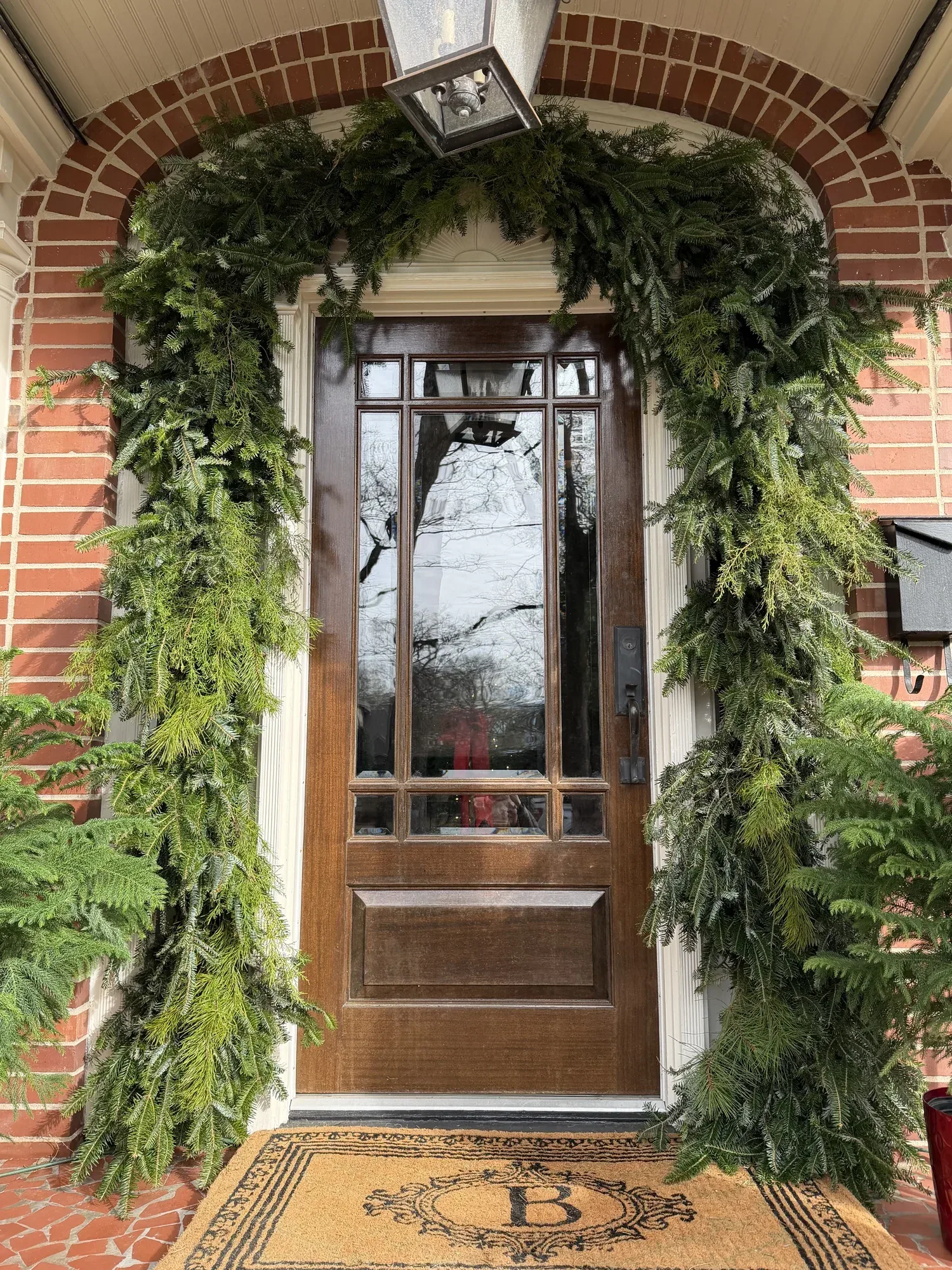
Christmas decorating has a particular way of going wrong. Not badly — just slightly, in about nine places at once. The tree is a foot too short for the room. The mantel garland is beautiful for the first three feet and then runs out of ideas. The porch has a wreath on the door and nothing else, so the entrance reads as an afterthought. And in January it all comes down into unlabeled boxes, which is a problem you inherit from yourself eleven months later.
Seasonal styling treats the house as a whole for the season: trees, mantels, staircases and doorways designed for your actual rooms, sourced, installed in a single visit, and taken down and packed by room in January. Here's what that involves, when to plan it, and what makes the difference between decorated and designed.
Scale is the whole game
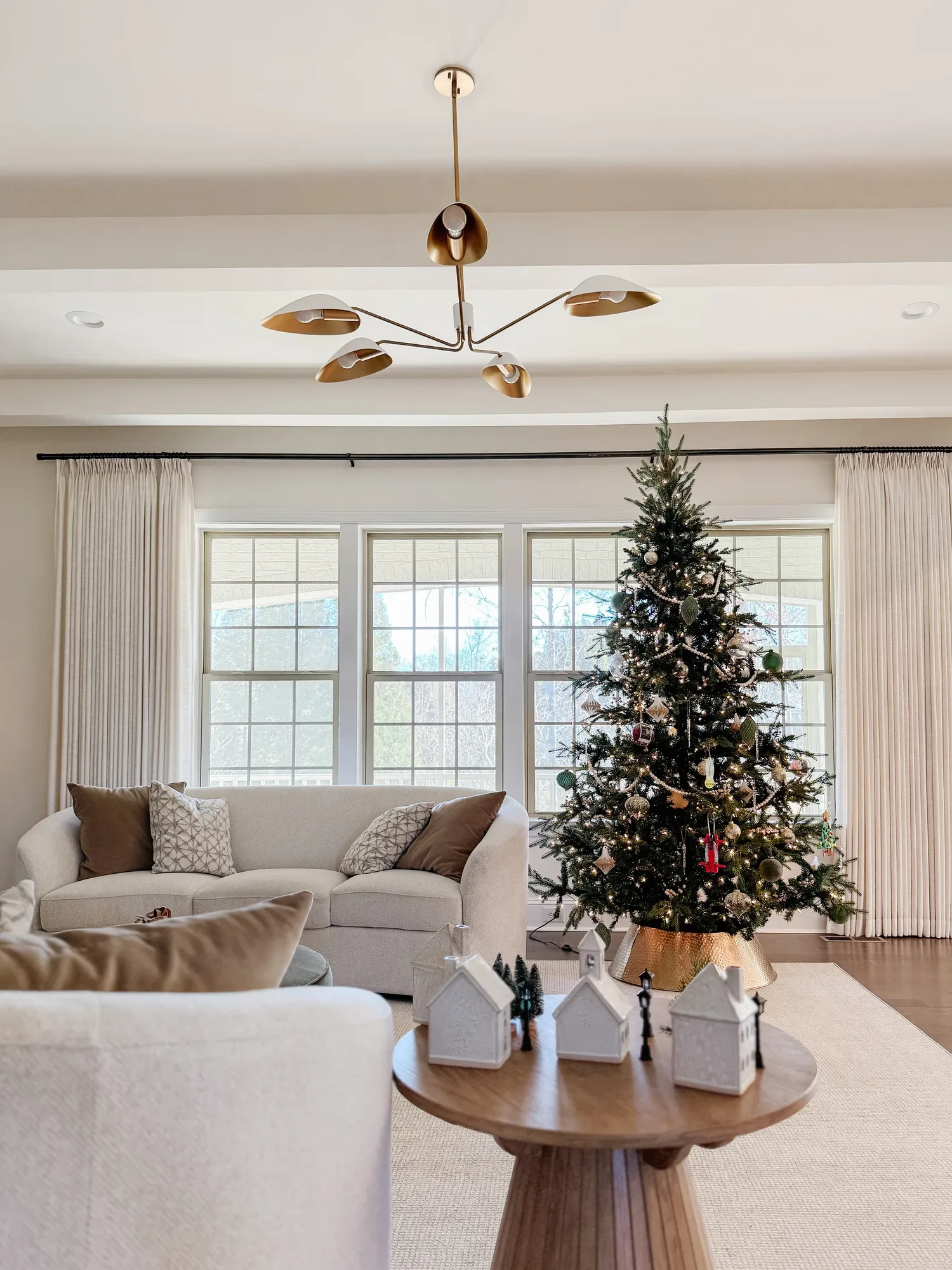
Almost every seasonal mistake is a scale mistake, and trees are where it shows most.
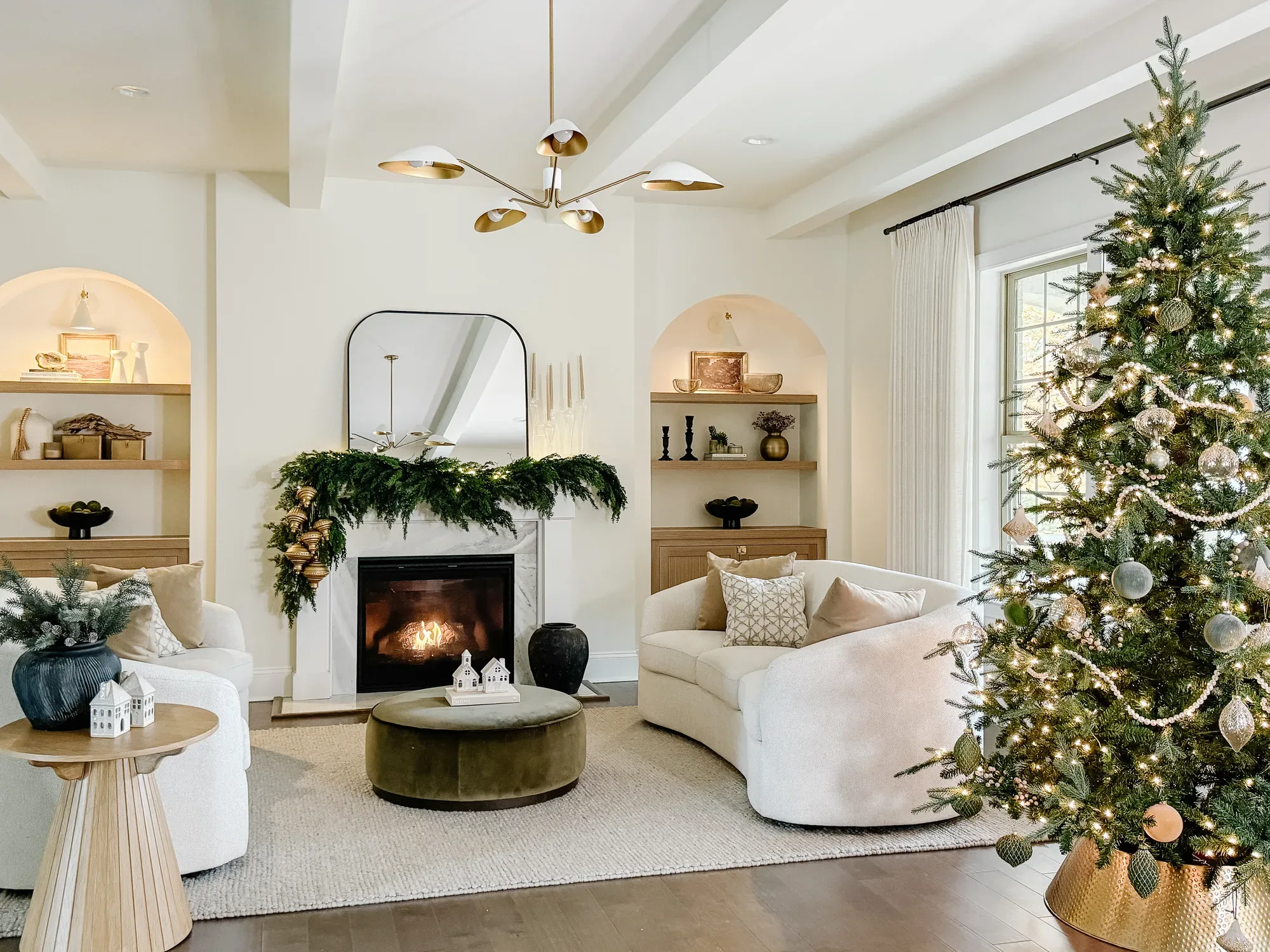
The rule I use: leave 8 to 12 inches between the top of the tree and the ceiling, and remember the topper eats most of that. In a room with 9-foot ceilings that means a 7.5-foot tree; with 10-foot ceilings, a 9-foot tree. In a two-story great room — which around here is very common — a 7.5-foot tree looks like a houseplant. Those rooms need 12 feet or more, or a different approach entirely: a tall, narrow tree flanked by lit branches, so the vertical volume is answered rather than ignored.
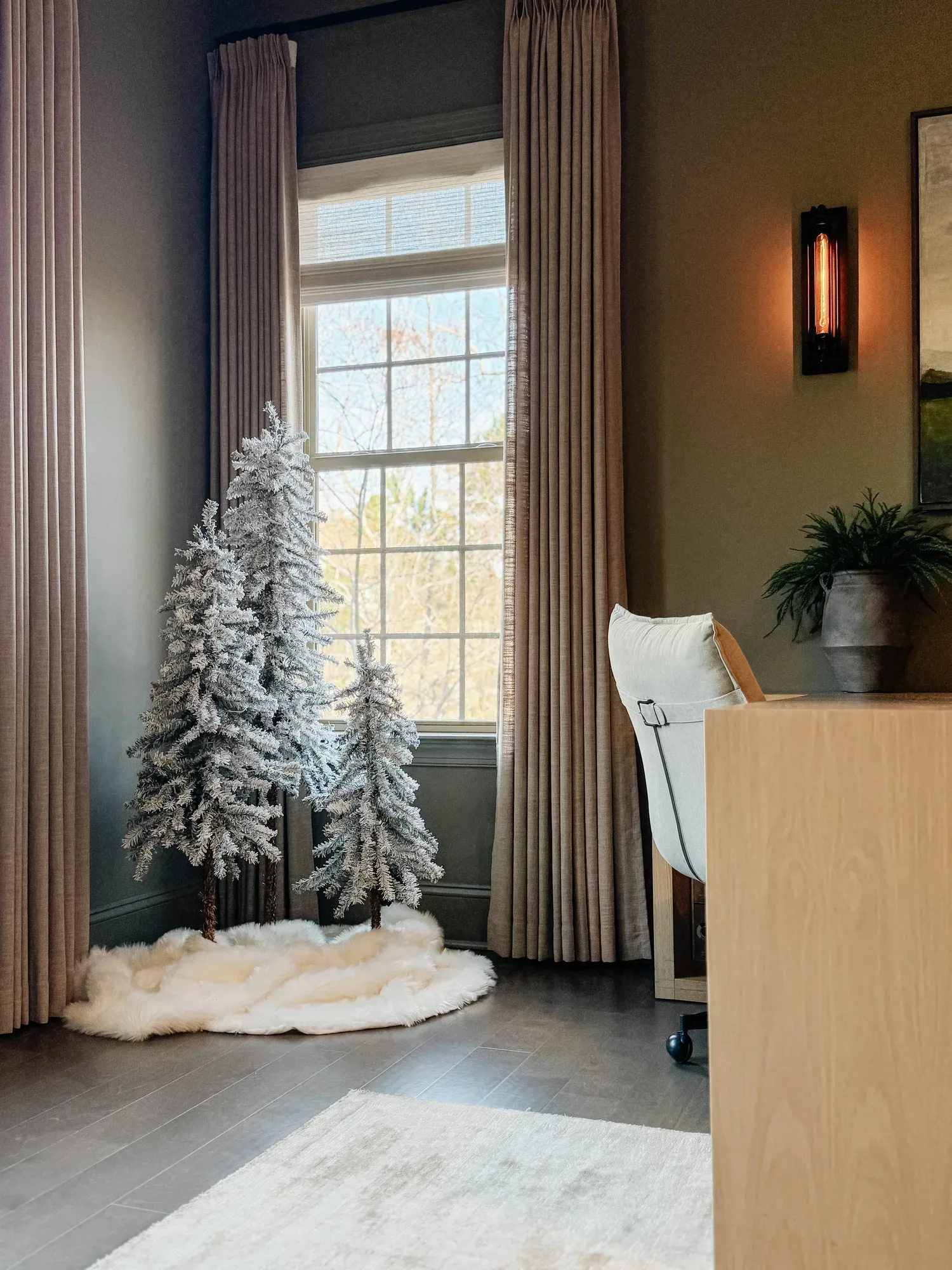
Width matters as much as height. A slim tree suits an entry or a dining corner; a full-profile tree needs floor space around it to be seen properly. The number people never think about is the stand-to-wall distance — a full 9-foot tree wants about 30 inches of clearance behind it, which changes where furniture sits for six weeks.
| Ceiling height | Tree height | Approx. lights | Notes |
|---|
| 8 ft | 6.5–7 ft | 500–700 | Slim profile if the room is tight |
| 9 ft | 7.5 ft | 800–1,000 | The most common Charlotte main-floor tree |
| 10 ft | 9 ft | 1,000–1,300 | Full profile earns its space here |
| 12 ft+ | 12 ft or a designed alternative | 1,500+ | Two-story rooms; a short tree reads as a mistake |
| Entry / dining corner | 6–7 ft slim | 400–600 | Depth matters more than height in a walkway |
On lights: 100 per foot of tree is the old rule and it's roughly half of what looks good. Aim closer to 150 per foot, wrapped into the interior of the branches as well as the tips — light coming from inside the tree is what gives it depth instead of a lit outline.
Building a mantel that doesn't run out
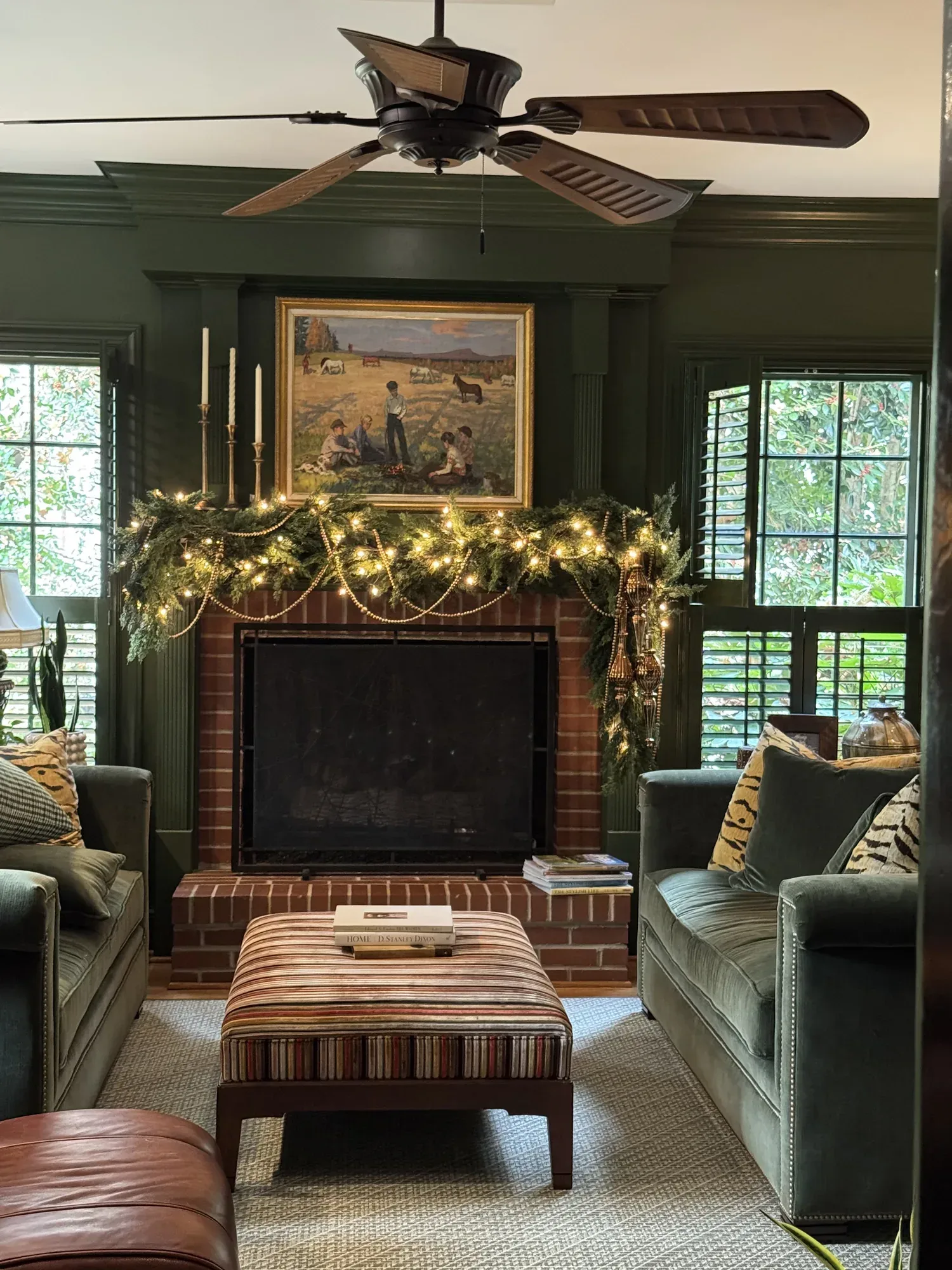
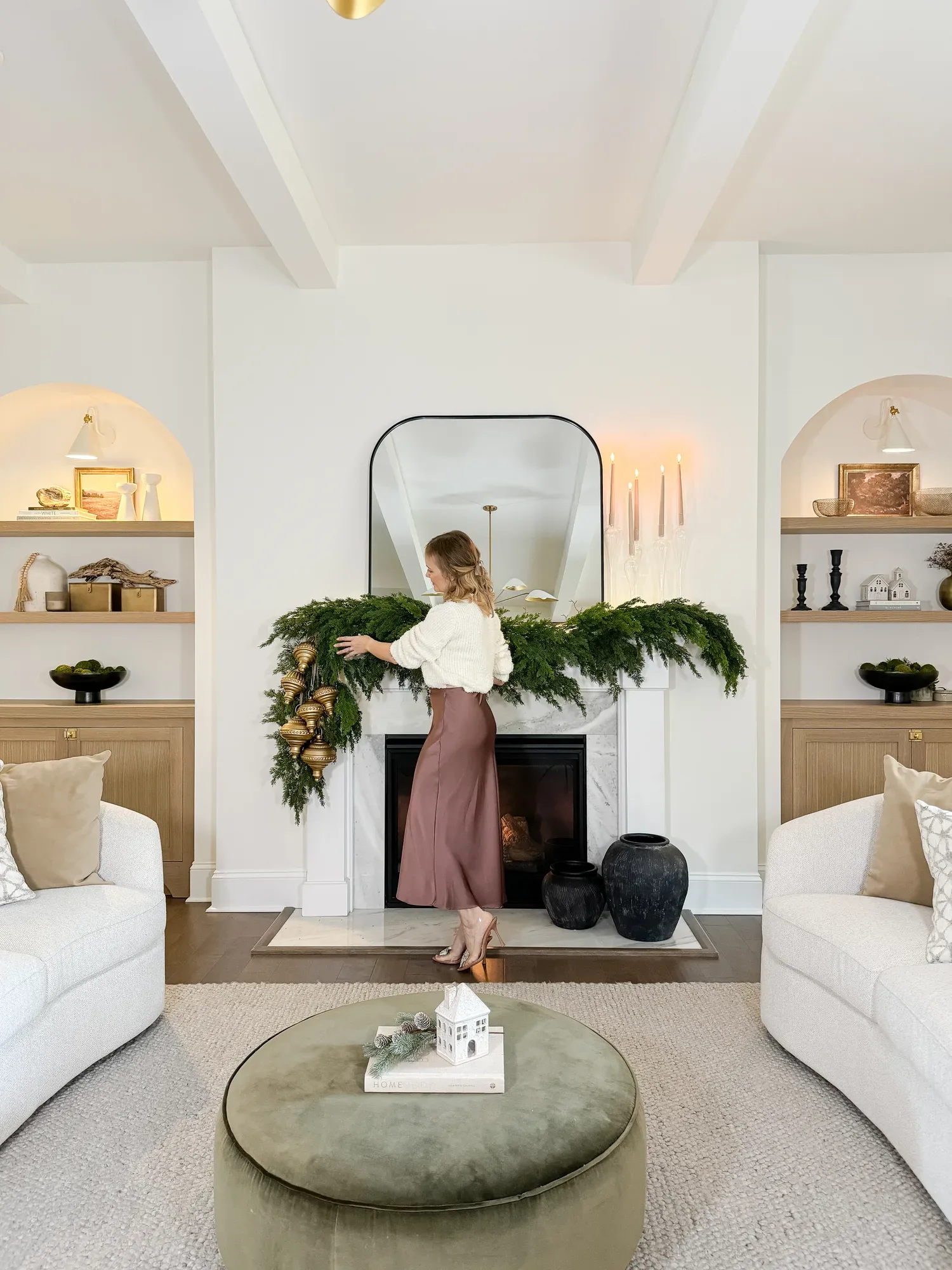
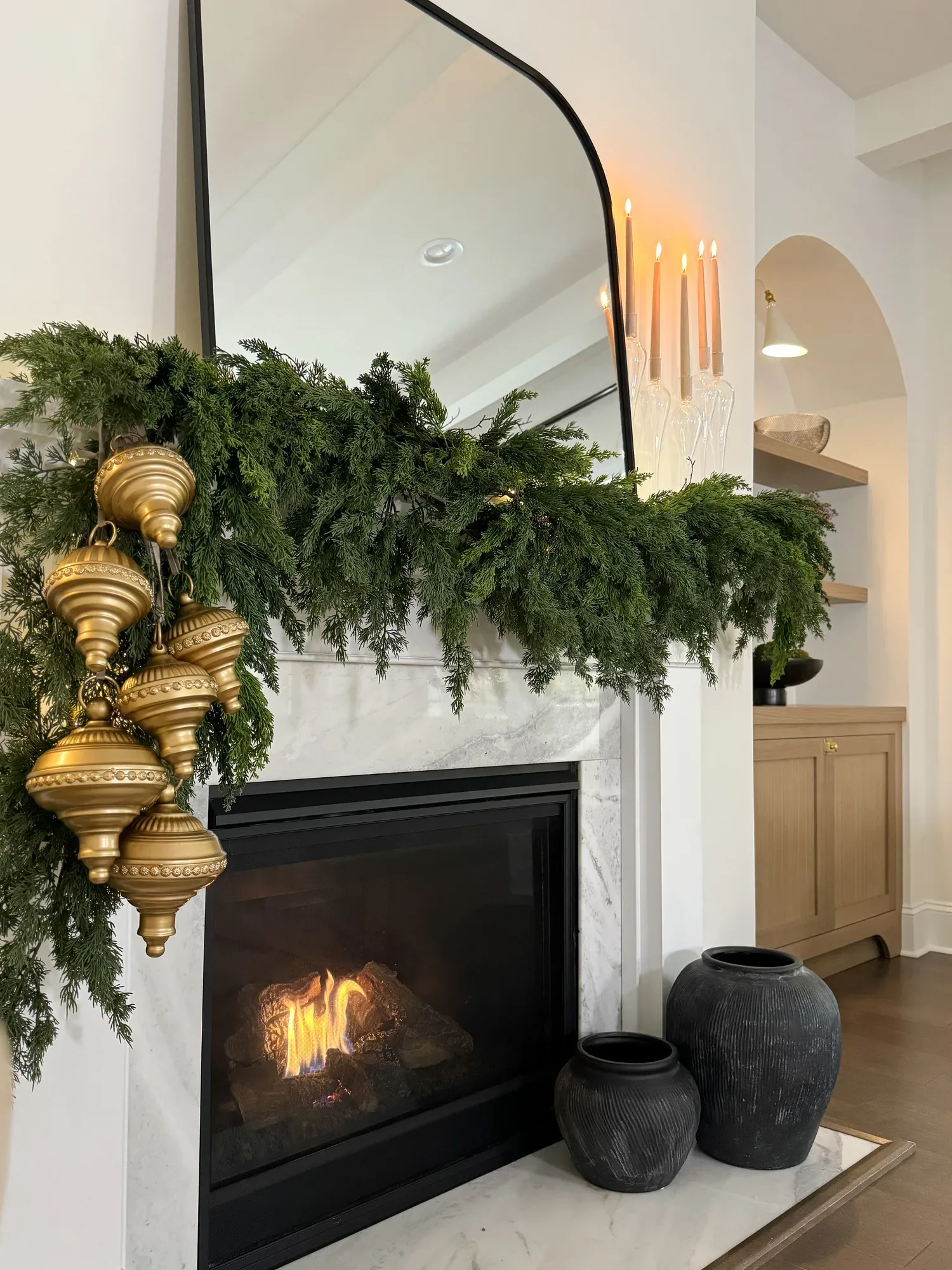
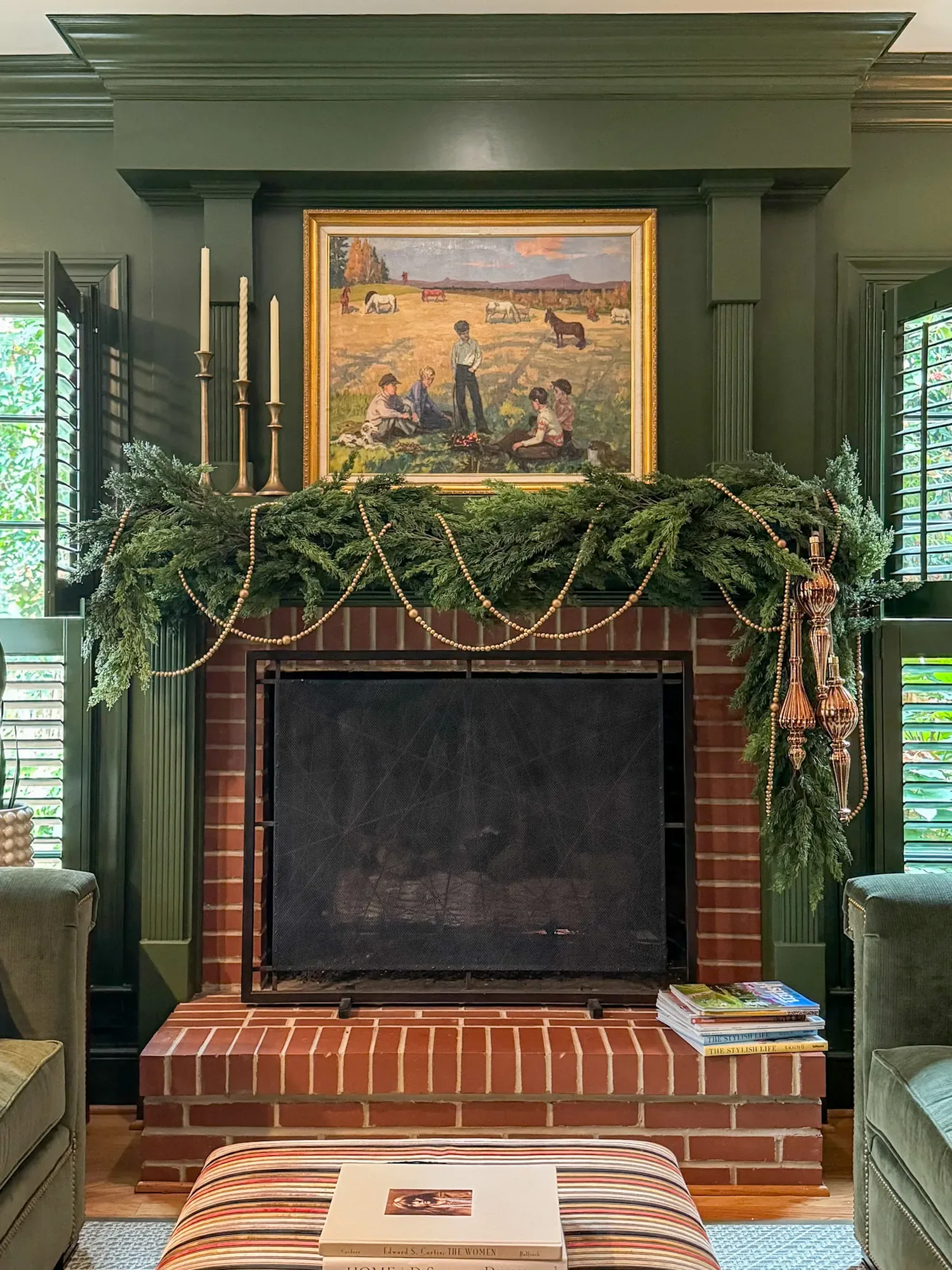
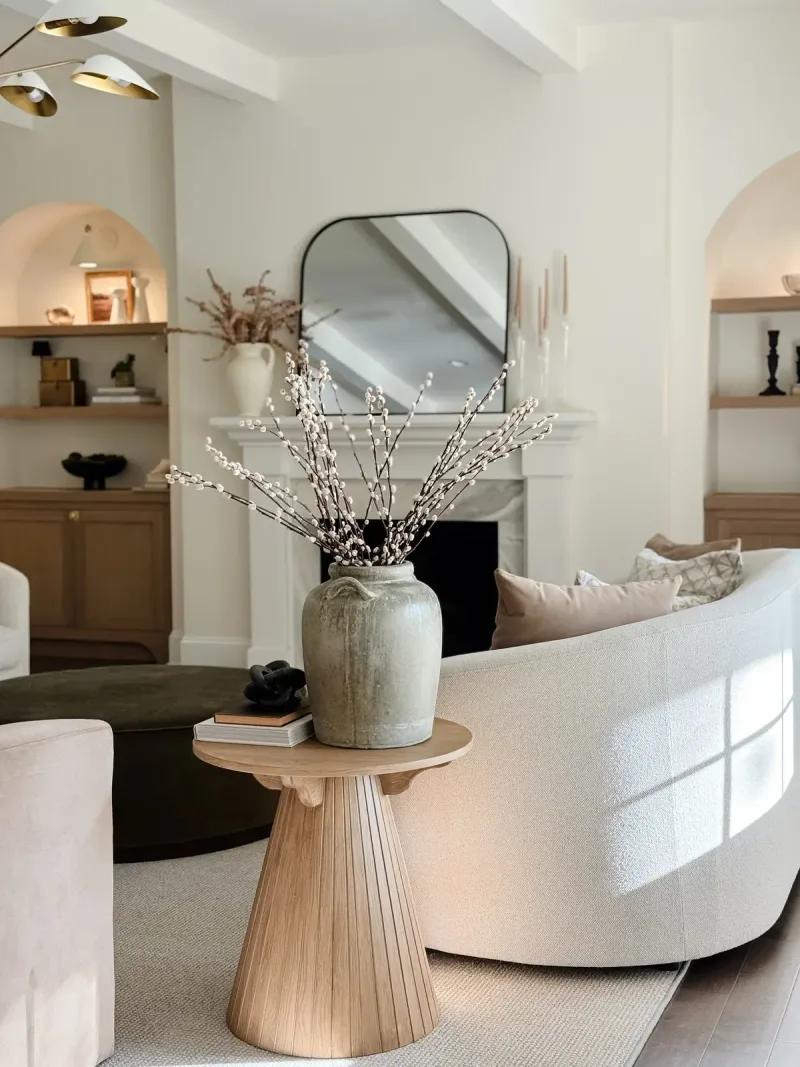
A mantel needs three things: asymmetry, layered depth and a reason for your eye to travel. Build a longer side and a shorter side rather than mirroring both ends, because symmetry on a mantel reads as a store display.
- Start with the anchor — usually the mirror or art above it, which is already there.
- Greenery goes on first, and should trail off one end and stop short of the other.
- Then depth: candlesticks at three heights, something with weight at the base of the taller side, and small pieces tucked at the back so the arrangement has a front and a back rather than a single row.
The practical constraints are the ones people skip. Anything above a working firebox must be flame-safe and clear of the heat path — real greenery dries out fast above a lit fire, and dried greenery near flame is genuinely dangerous. Weight matters if there are children or a cat: a heavy candlestick on the front edge is an accident waiting.
The test for any mantel: stand where you actually sit. If it only looks right head-on from four feet away, it's a photograph, not a room.
Staircases
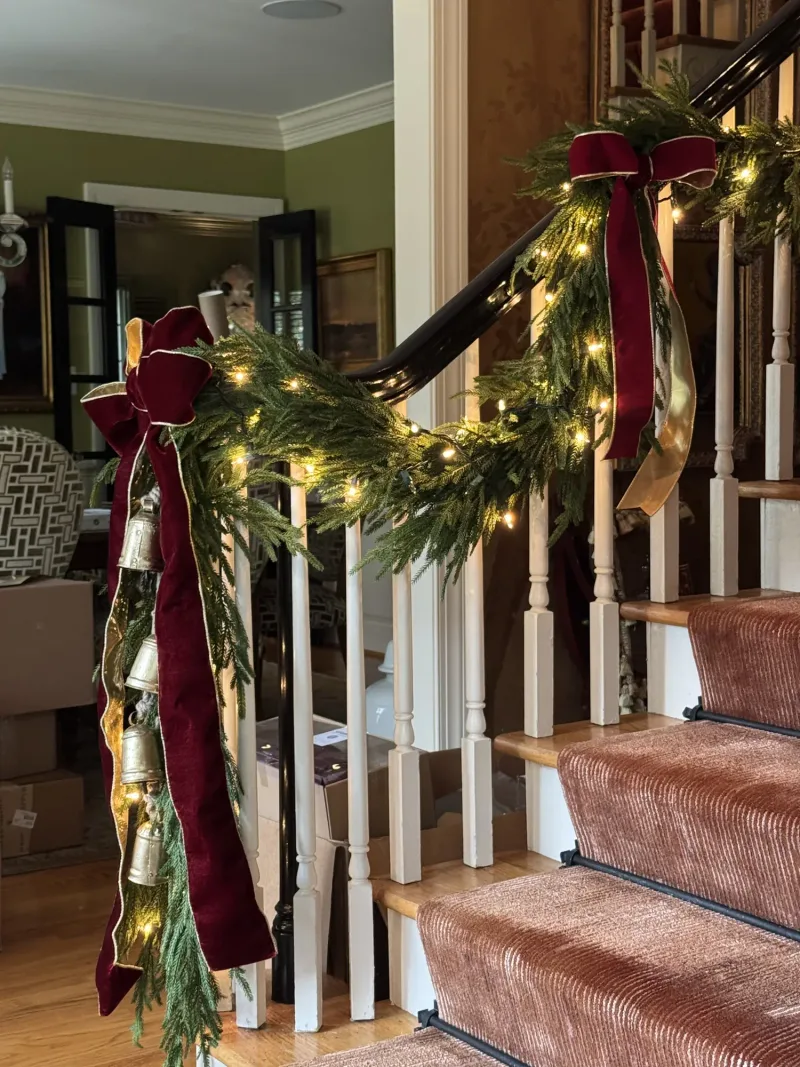
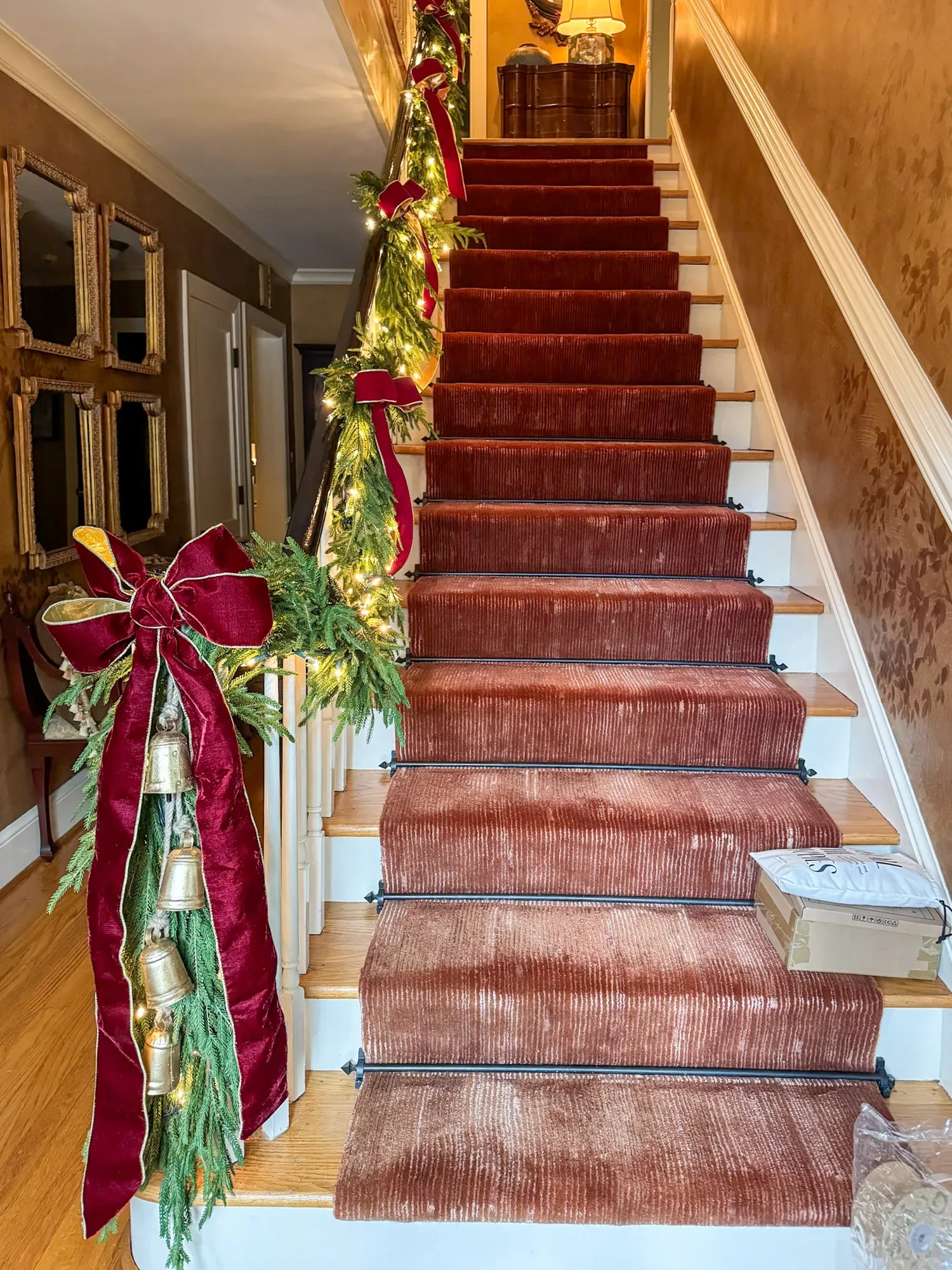
A garland on a banister is either the best thing in the house or the most obviously store-bought, and the difference is fixing and continuity.
Length first: measure along the handrail, not the floor, and add a third for the swag. Garland that's cut to length hangs flat and looks exactly like what it is. The swag is the point — consistent drops between fixings, deeper than feels correct, because it reads shallower once you're standing below it.
Fix at the newel post and at consistent intervals with a method that doesn't mark the rail — floral wire over felt, or fixings sized to the baluster. Lights go on before the greenery is dressed, batteries or a plug run planned so the cord doesn't cross the tread. And whatever happens, nothing may narrow the walking width of the stair or sit where a hand needs the rail. That's a safety line, not a styling preference.
London-inspired porches
This is the piece that changes the house from the street, and it's the one most often reduced to a wreath.
The idea is a doorway installation rather than a door decoration: layered greenery built around the opening, scale that answers the architecture, lighting worked in, and materials that survive weather. It's designed for your entrance specifically — the width of the surround, the height of the transom, whether there are columns, sidelights, a portico, steps.
The materials question is the whole thing. Charlotte gets warm damp spells through December and hard freezes without much warning, and fresh greenery on a south-facing porch in a mild week browns fast. Weather-durable materials — good faux mixed with hardy fresh elements — hold their appearance through the season, which is why the exterior work is specified that way.
Practical points:
- Lighting on the exterior needs a plan for power and an outdoor-rated timer.
- Anything at a doorway must not narrow the entrance or become a trip hazard on a step.
- Everything gets fixed to withstand wind rather than propped.
Palette, and why it's decided first
The season is not an exemption from the rest of the house. A scheme that fights the room it's in reads as clutter no matter how good the individual pieces are, which is why every project starts with a written scope and palette: greenery type, ribbon, ornament finishes and lighting temperature, agreed before anything is sourced.
Two decisions do most of the work. First, warm white lights or cool white — and then that choice is held consistently through the whole house, because two temperatures in one sightline is the seasonal equivalent of mixing whites. Second, the metal: whether the ornaments and accents run gold, silver, or a soft bronze. Picking one and letting it dominate is what makes a mixed collection look collected rather than accumulated.
Working with the house's existing palette matters too. Deep reds sit beautifully against warm neutrals and fight a cool gray room, which is worth knowing before you buy forty ornaments in one family. If you'd like the underlying palette sorted properly, that's the paint consultation, and the dark greens piece is relevant if you're drawn to a richer backdrop.
What happens to the décor you already own
It's looked at honestly and used where it still earns its place. Ornaments with history stay — those are the point of the whole exercise. What usually gets retired is the filler: the faded picks, the garland that's shed half its needles, the ribbon that was a different color three years ago.
Anything missing is sourced, and it's a shorter list than most people expect once the palette is settled, because a large part of what looks wrong is inconsistency rather than absence.
Timing, and when to actually plan this
Earlier than feels natural. Sourcing and preparation happen well before install day, and the good material — particular ribbon, specific ornament finishes, quality faux greenery — sells out in autumn rather than in December. A room added while the scope is still open is straightforward; one added the week of the install may not be possible.
Installation itself is a single visit, with packaging and debris taken away at the end. What takes the time is everything before it. Takedown happens in January, with everything packed and labeled by room for storage — which means next season starts from something organized rather than from a garage of unmarked boxes.
Storage, since it decides next year
Label by room, not by type. "Family room mantel" is a useful label; "garland" is not, because in eleven months you won't remember which garland went where.
- Ornaments go into compartmented boxes rather than loose.
- Ribbon is rolled, not folded, or it keeps the crease permanently.
- Faux greenery is stored uncrushed — the shape is most of what you paid for.
Photograph each finished room before takedown. It's the fastest possible brief for the following year, and it's free.
Greenery: real, faux, or both
The honest answer is both, placed deliberately.
Real greenery smells like the season and nothing replicates that. It also drops, dries and browns — fast in a heated room, faster above a working fireplace, and unpredictably on a porch through a warm December week. Fresh garland on an interior stair rail typically looks its best for two to three weeks with regular misting, less if the house runs warm.
Good faux holds its shape and color for the whole season and improves every year that the manufacturing does. Bad faux is unmistakable, and the tell is uniformity: identical needles, one flat green, and a stem that reads as plastic where it meets the branch. What separates the two is variation in needle length and tone, and a wire core you can actually shape.
If you're choosing a faux tree yourself, the same test applies as for any faux greenery, and the piece on choosing a faux olive tree covers what separates convincing from obvious.
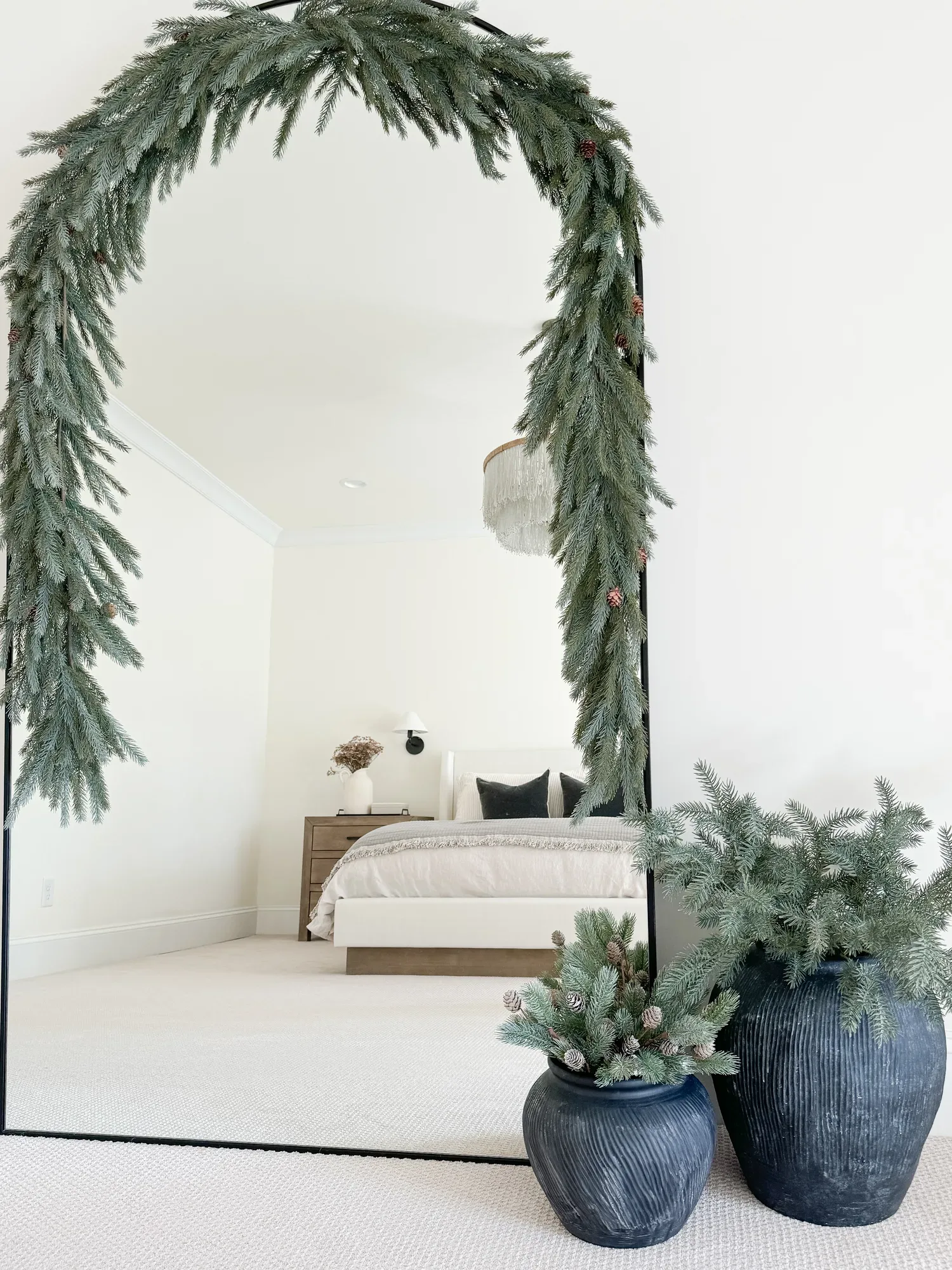
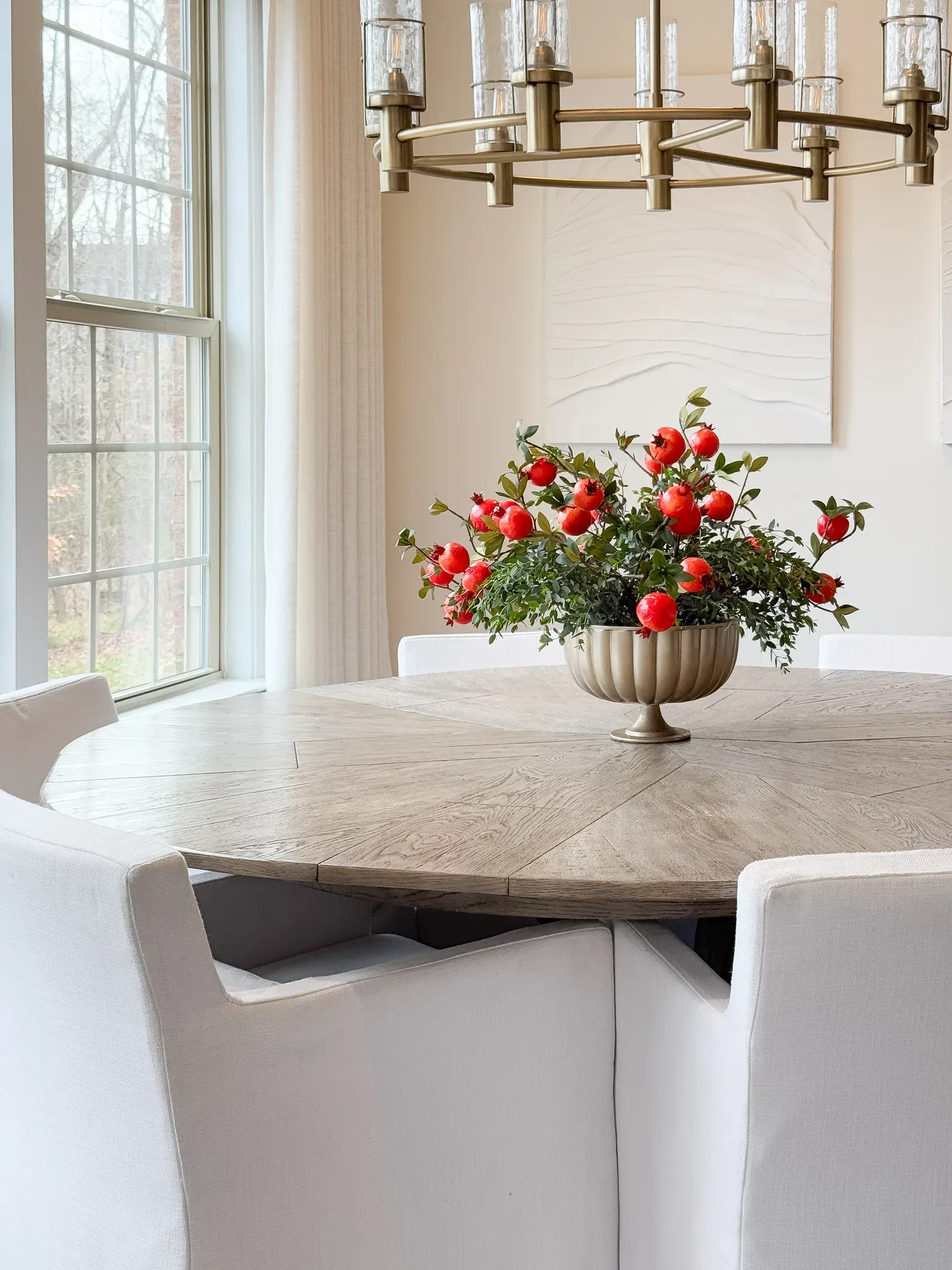
The approach that works: faux as the structure — the garland, the wreath base, the porch installation — with fresh elements worked in where they'll be seen and smelled and can be refreshed. Cedar, eucalyptus and a few fresh stems in an entry arrangement give you the scent without staking the whole season on something perishable.
Ribbon, and why it's the thing that dates a room
Ribbon is the fastest way to make a scheme look current or ten years old, and it's a small part of the budget.
- Width should answer scale: a 2.5-inch ribbon disappears on a 9-foot tree and overwhelms a tabletop arrangement.
- Wired edges hold a shape and are worth the extra cost anywhere the ribbon has to stand up rather than lie flat.
- Velvet reads richer and photographs beautifully but flattens under weight, so it belongs where nothing rests on it.
On a tree, ribbon worked in vertical cascades from the top reads more considered than horizontal wrapping, and it's far easier to adjust. Cut the lengths longer than you think — a tail that ends abruptly looks cut, and one that curls into the branches looks placed.
Lighting the season properly
Seasonal lighting is the same discipline as any other lighting: temperature consistency, layers, and control.
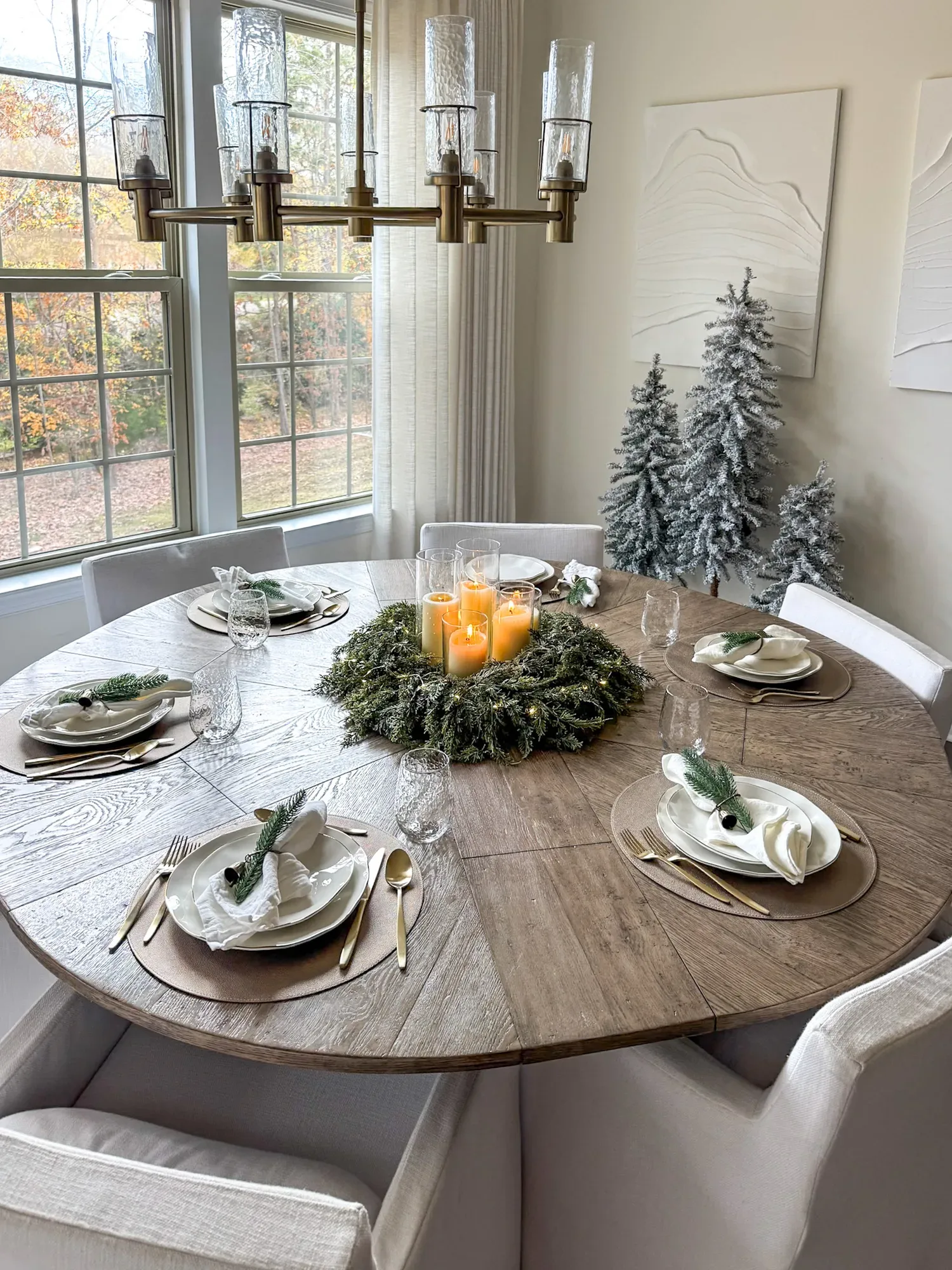
Pick warm white or cool white and hold it across the whole house. Warm white sits comfortably with the interior lighting most homes already have; cool white reads crisper and more contemporary but fights warm lamps in the same sightline. Mixing them is the most common seasonal lighting error, and it's visible from the street when it happens on an exterior.
Put everything on timers, indoors and out — nobody keeps plugging things in by mid-December, and an installation that's dark half the evening may as well not be there. Outdoors, use outdoor-rated cords and an outdoor-rated timer, keep connections off the ground and out of standing water, and plan the power route before the greenery goes up rather than after. Indoors, keep cords off walkways and away from anything that swings.
A tree lit properly and a porch lit properly will do more for the house than another six boxes of ornaments. Light first, then decorate.
Which rooms are usually included
The ones you actually use over the season and the ones guests see first — commonly the entry and porch, the main living room, the dining room and the staircase. Every room in scope is walked and measured, because a tree that's right for the family room is wrong for the entryway, and a mantel composition that works in a tall room looks overloaded in a low one.
Where to start
Send:
- Photographs of the rooms you're considering, with ceiling heights.
- A photograph of what you already own — the tree if you have one, and a box or two of the ornaments that matter.
- A note about what worked and what annoyed you last year, which is more useful than any inspiration image.
If the entry is the part that bothers you most, The Warmest Welcome is a doorway project worth a look.
If the rooms themselves need work before they're worth dressing, full interior design is the longer answer, and procurement handles the pieces. If you just want a second opinion on your own plan for the season, an hour on a virtual consultation will do it.
You can see seasonal work in The Magic of Coming Home for Christmas and A Fresh Start, Beautifully Reimagined, and the fireplace decorating piece covers the mantel principles above in more detail if you're doing it yourself.