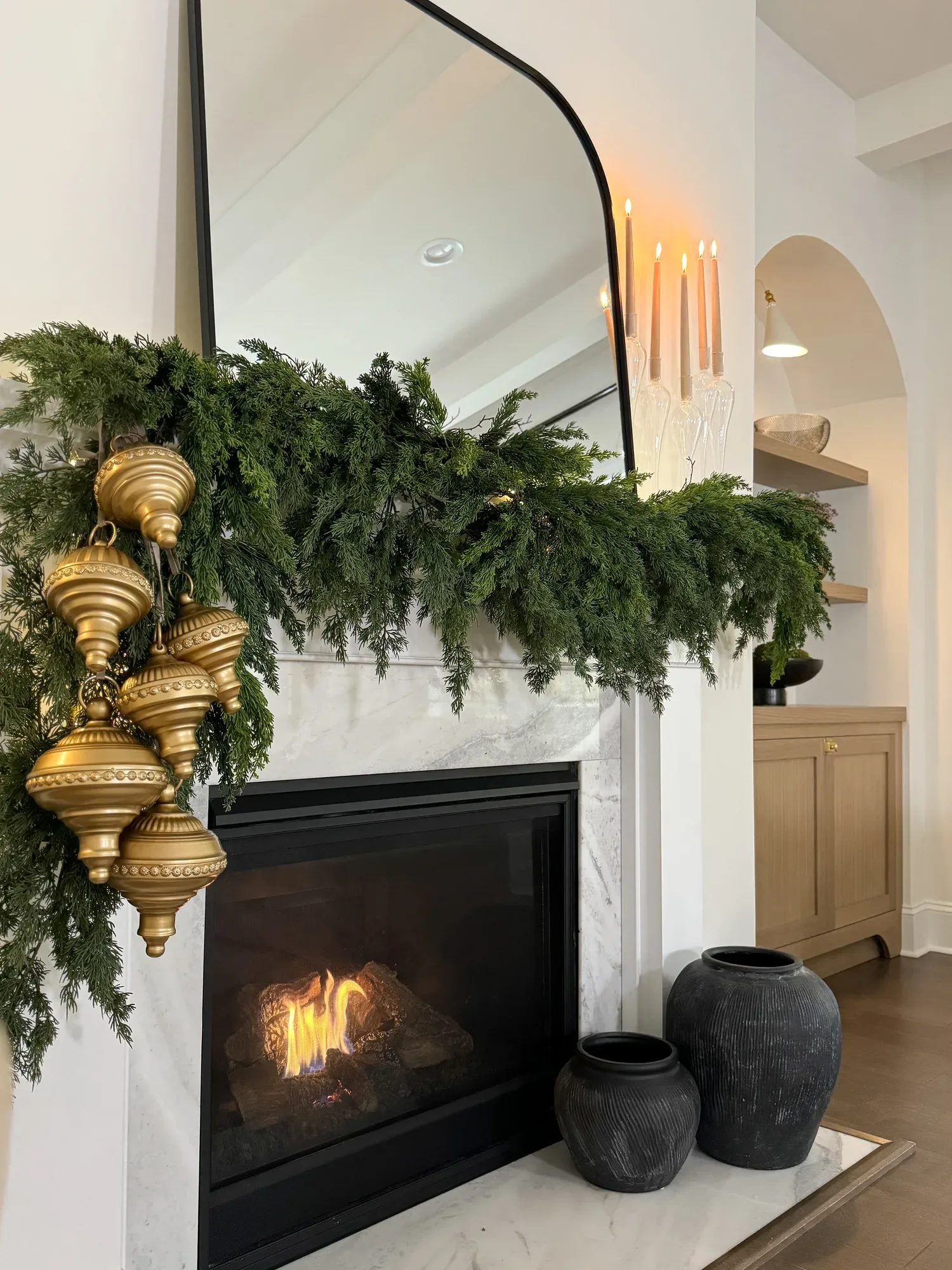
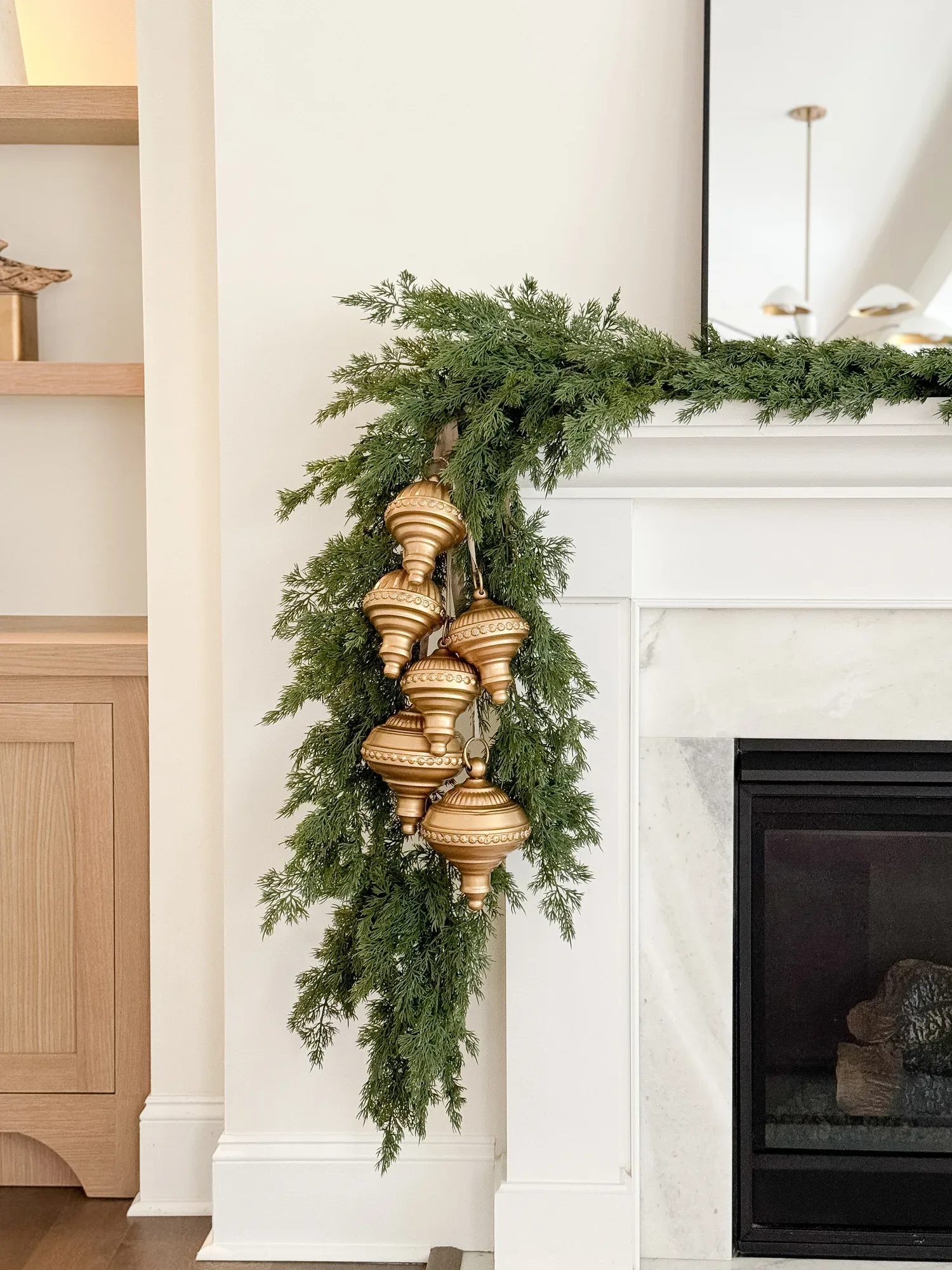
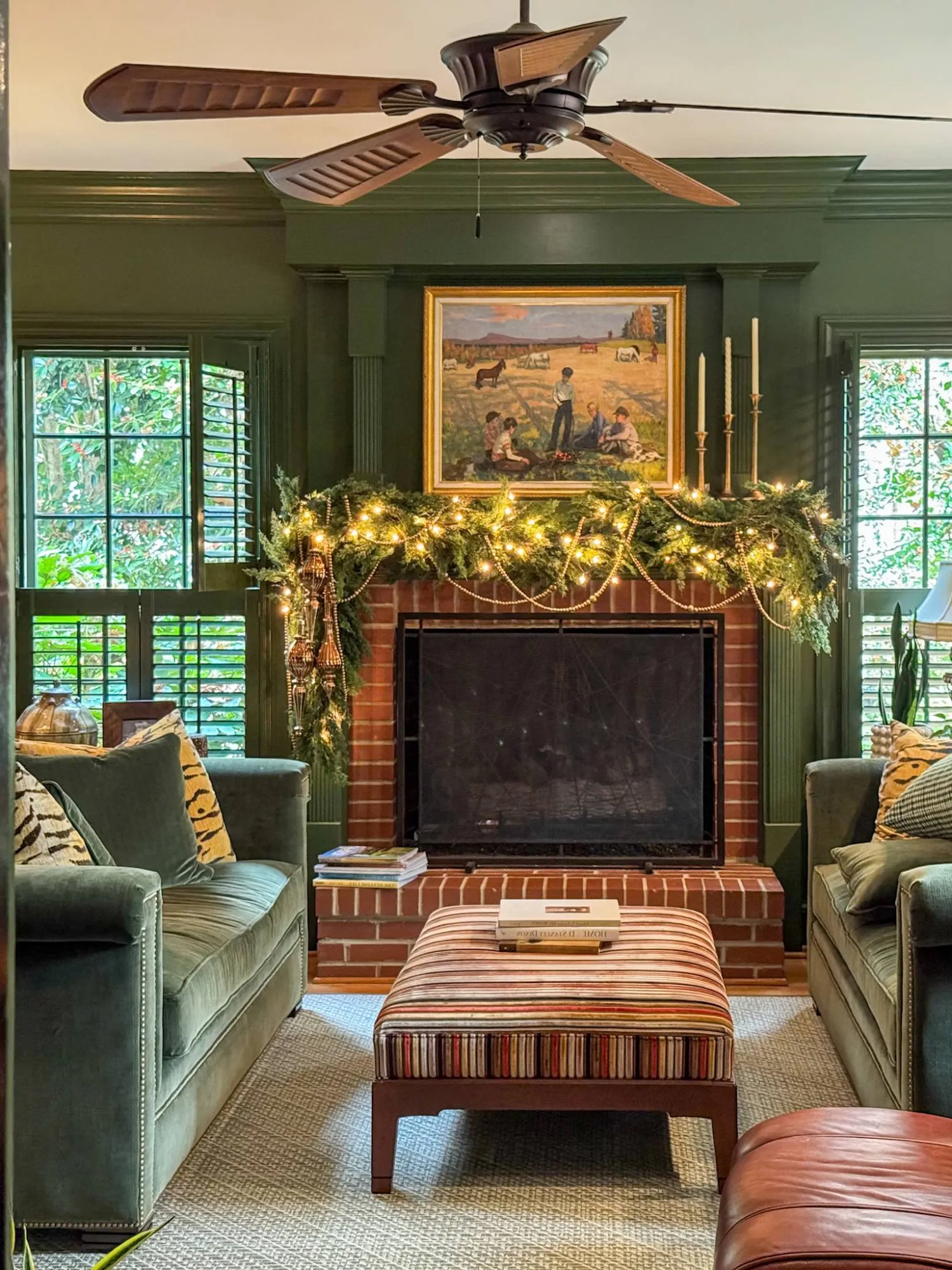
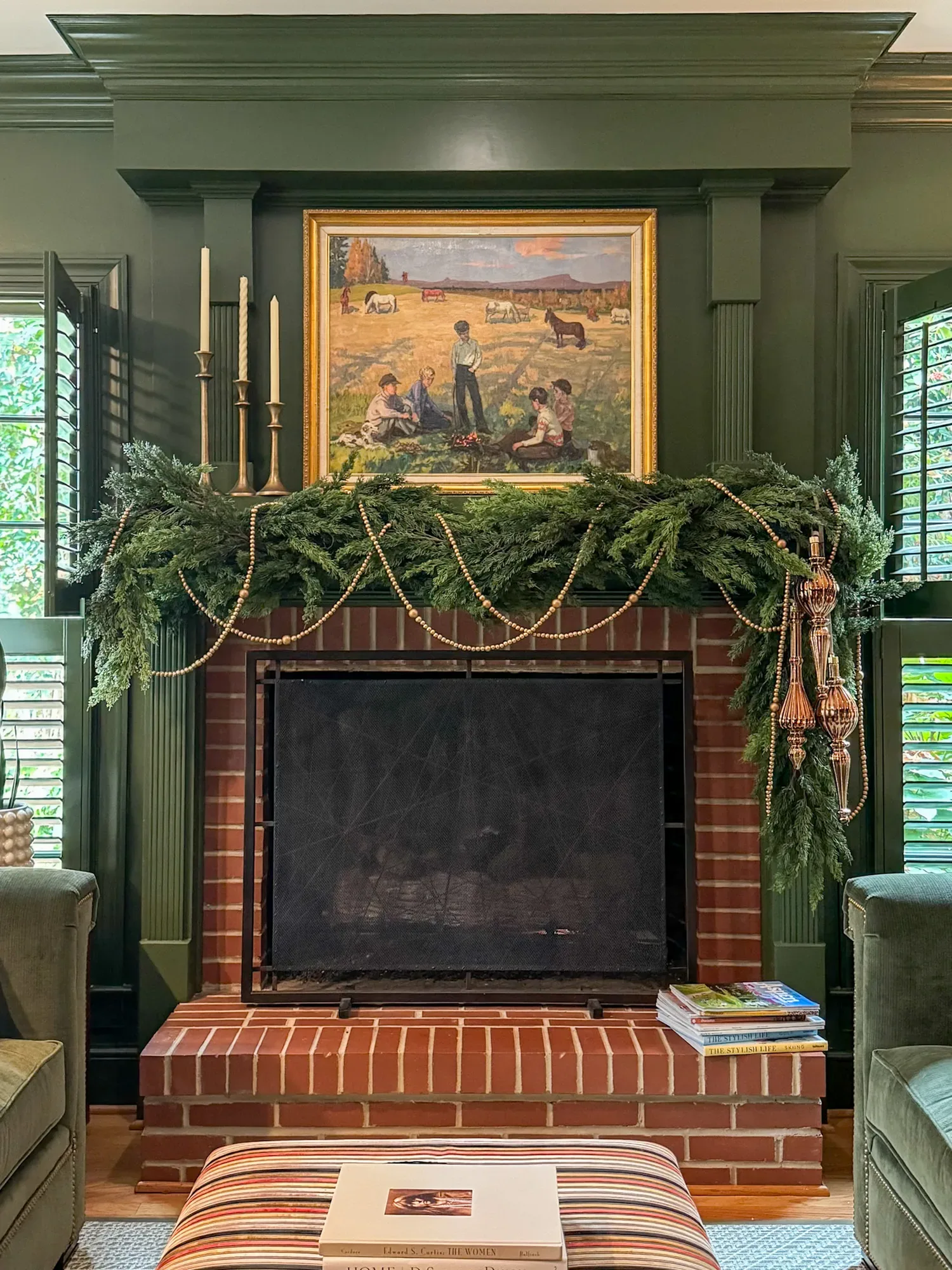
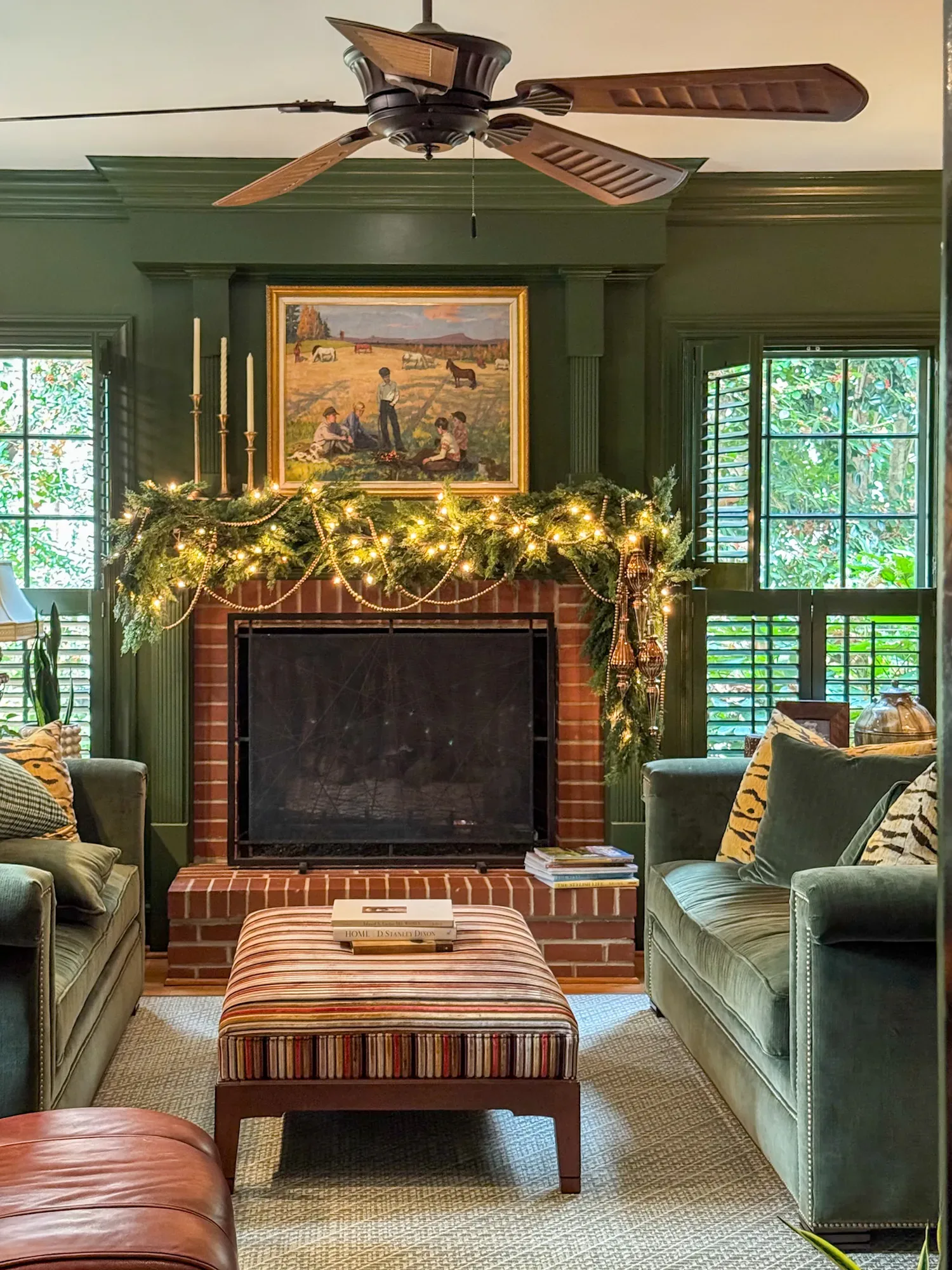
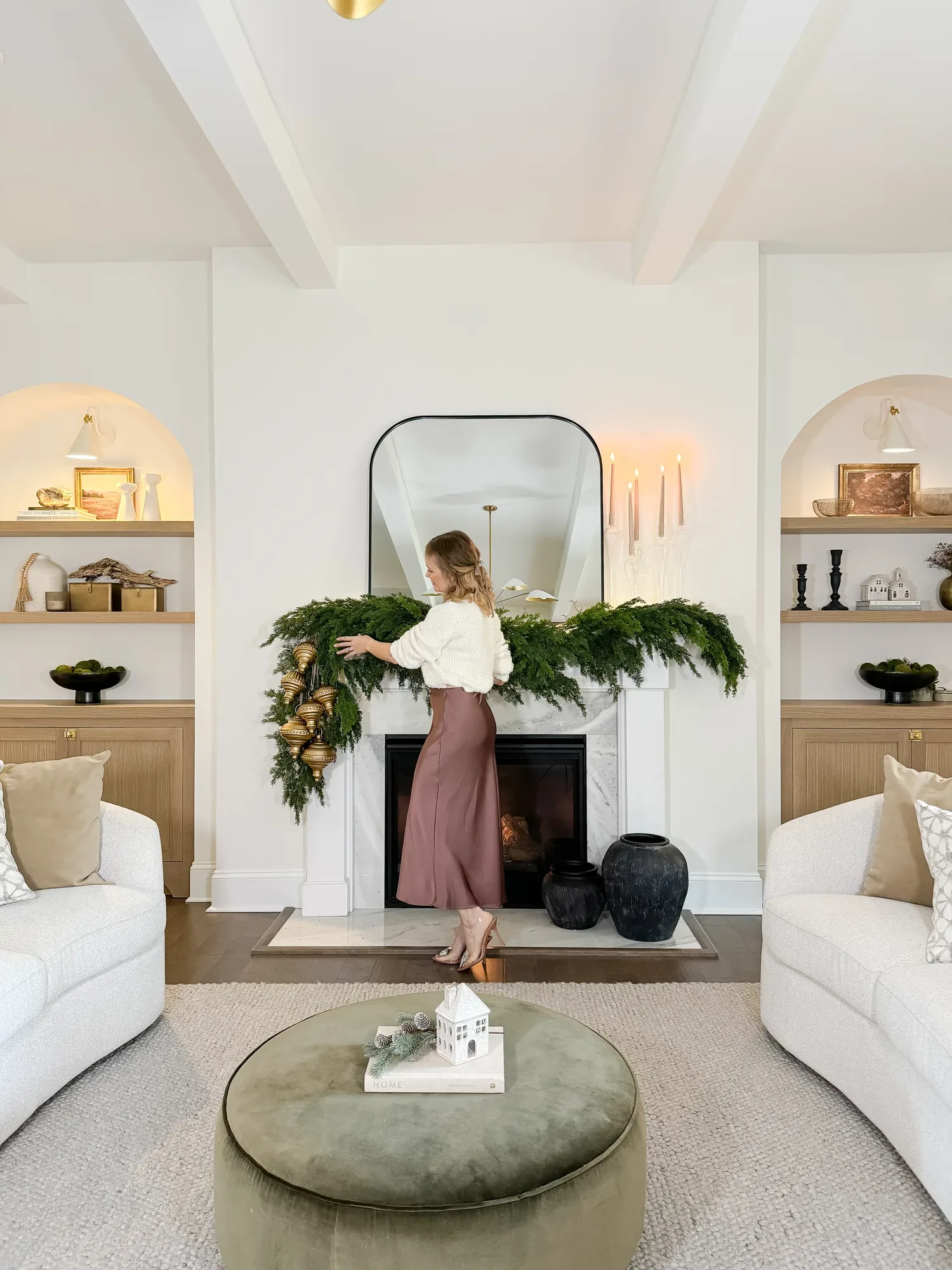
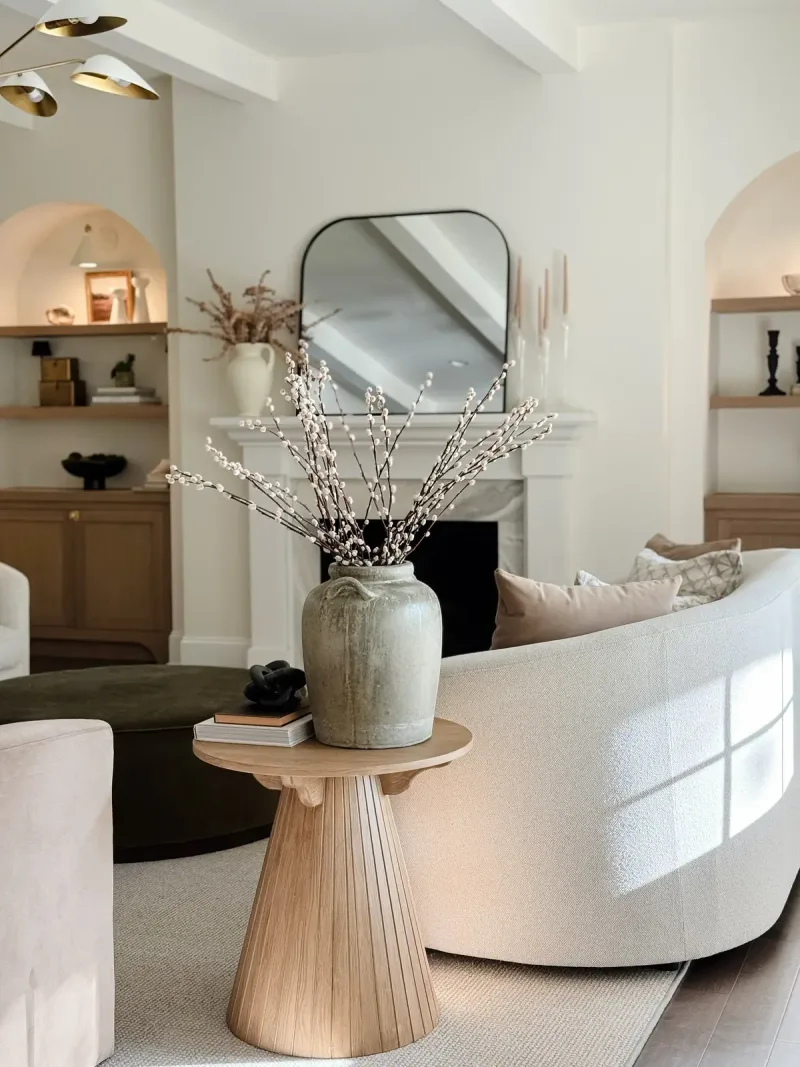
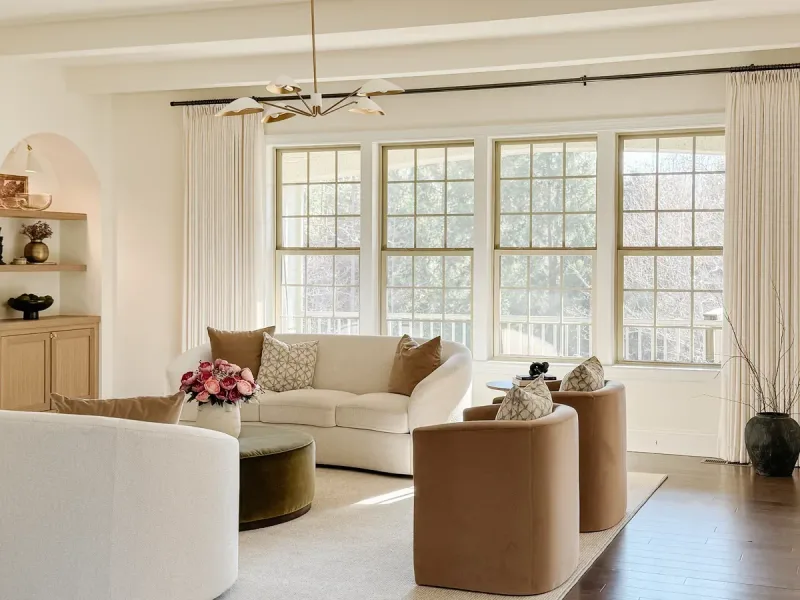
A mantel needs three things: asymmetry, layered depth and a reason for your eye to travel. Build a longer side and a shorter side rather than mirroring both ends, because symmetry on a mantel reads as a store display.
- Start with the anchor — usually the mirror or art above it, which is already there.
- Greenery goes on first, and should trail off one end and stop short of the other.
- Then depth: candlesticks at three heights, something with weight at the base of the taller side, and small pieces tucked at the back so the arrangement has a front and a back rather than a single row.
The practical constraints are the ones people skip. Anything above a working firebox must be flame-safe and clear of the heat path — real greenery dries out fast above a lit fire, and dried greenery near flame is genuinely dangerous. Weight matters if there are children or a cat: a heavy candlestick on the front edge is an accident waiting.
The test for any mantel: stand where you actually sit. If it only looks right head-on from four feet away, it's a photograph, not a room.