 01
Christmas Trees
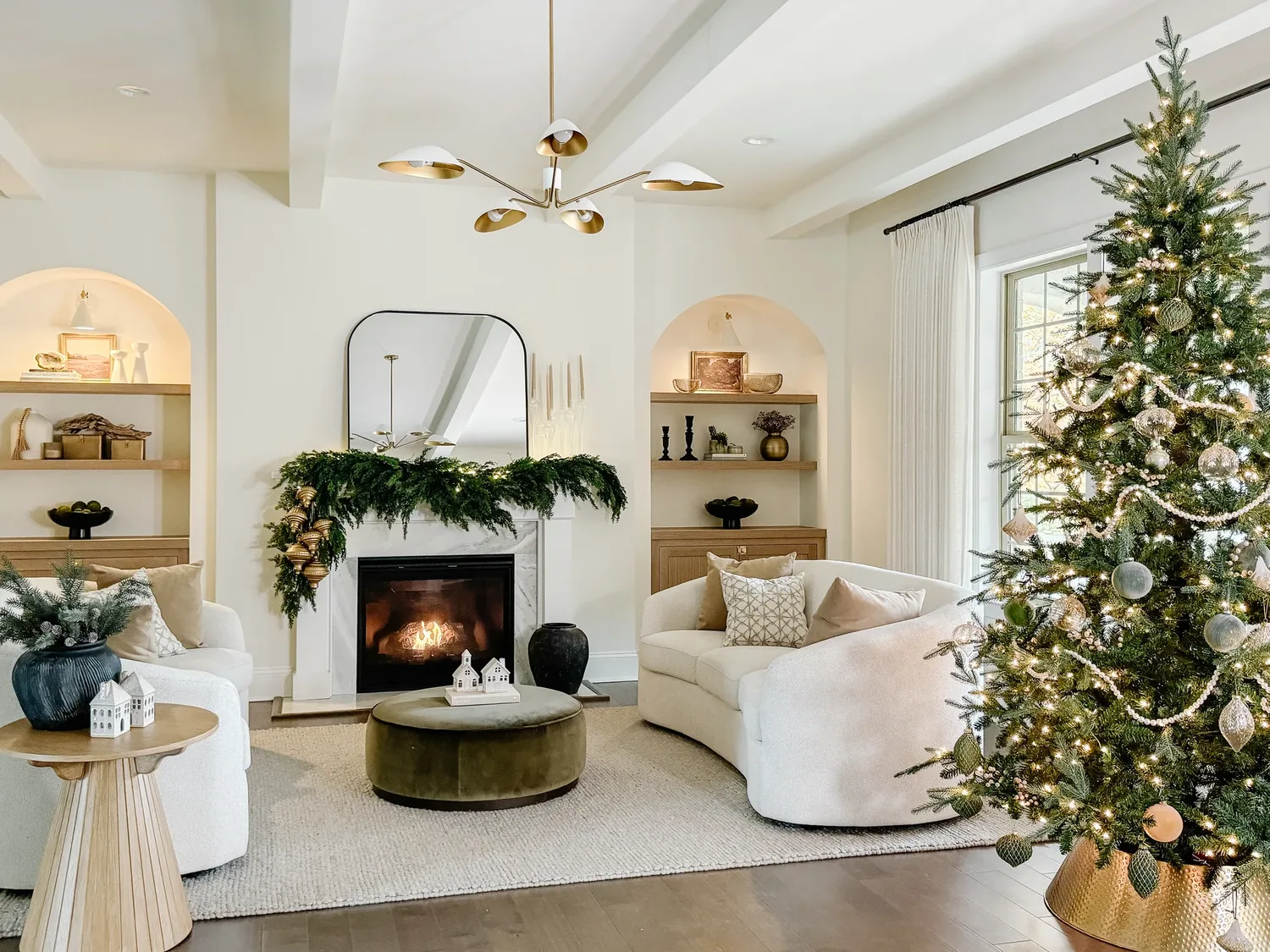
One tree or several, sized to your ceiling and dressed for the room it stands in.
Explore Christmas trees
Christmas decorating · Charlotte, NC
I’m a professional Christmas decorator in Charlotte, NC. Trees, mantels, staircases, porches, and holiday tables, designed for your rooms, installed in one visit, and taken down in January.
What you can book
If you’d like to hire a Christmas decorator this year, here is how I work. I design the season around your rooms and the décor you already own, source only what’s missing, and install everything in one visit. In January I come back, take it all down, and pack it labeled by room. This is residential holiday decorating, and I offer it only in the Charlotte area.
01One tree or several, sized to your ceiling and dressed for the room it stands in.
Explore Christmas trees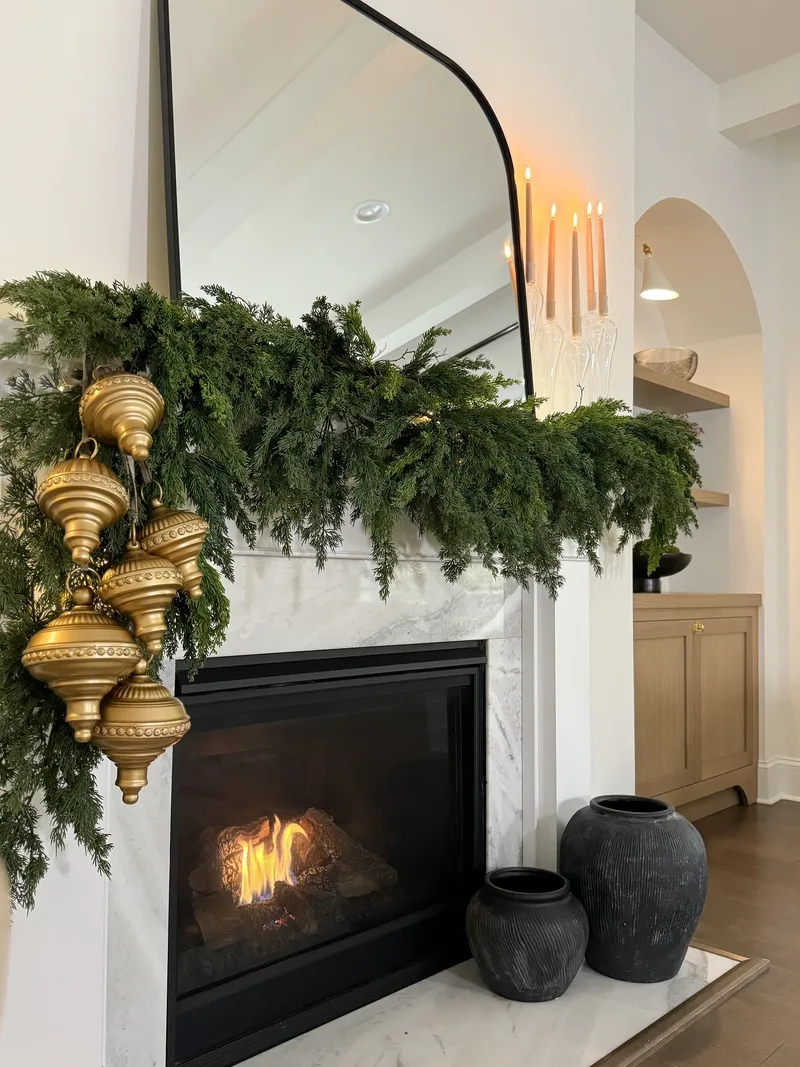 02
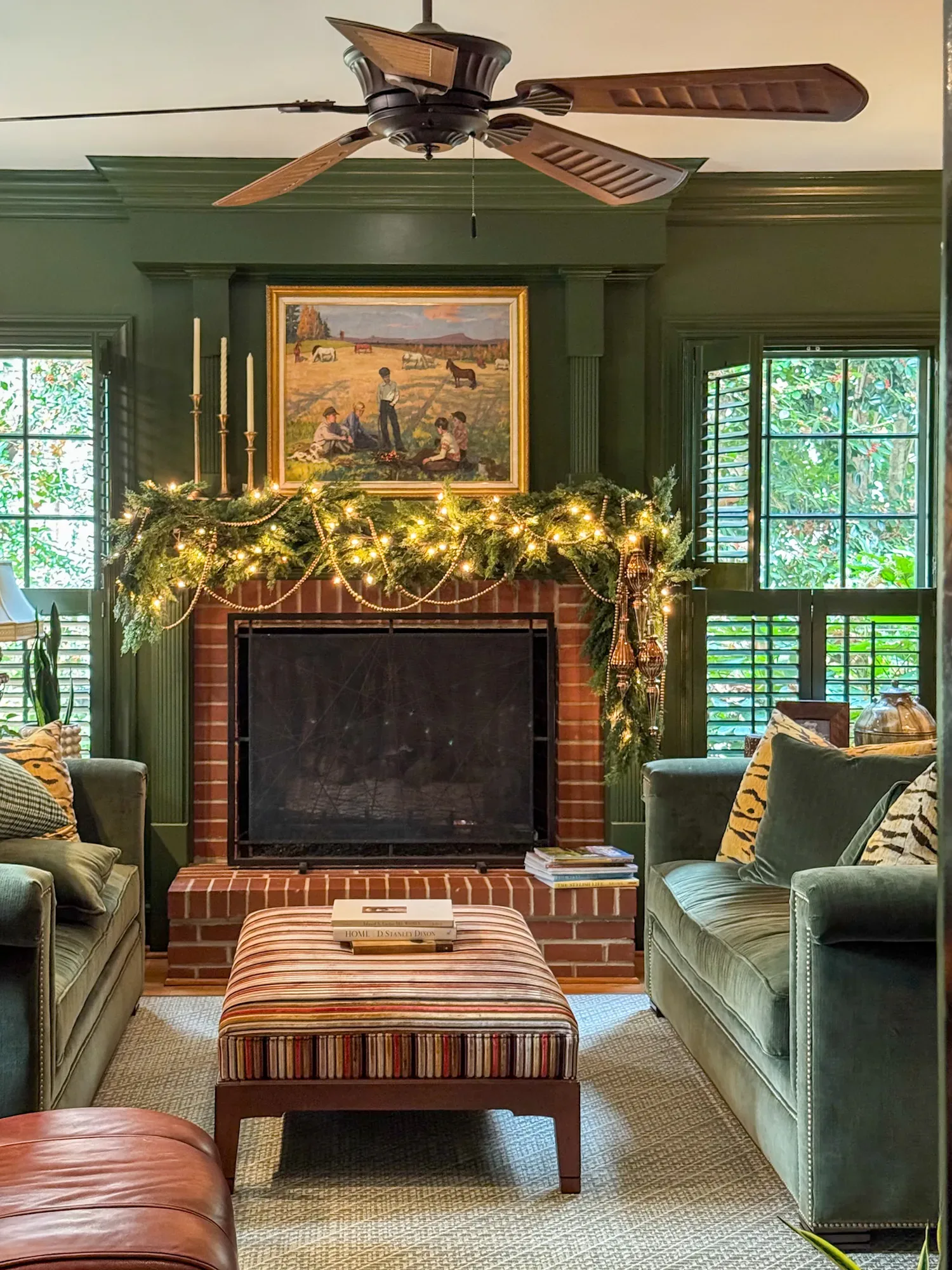
A garland built to your fireplace, layered and lit, and safe above a working fire.
Explore Christmas mantels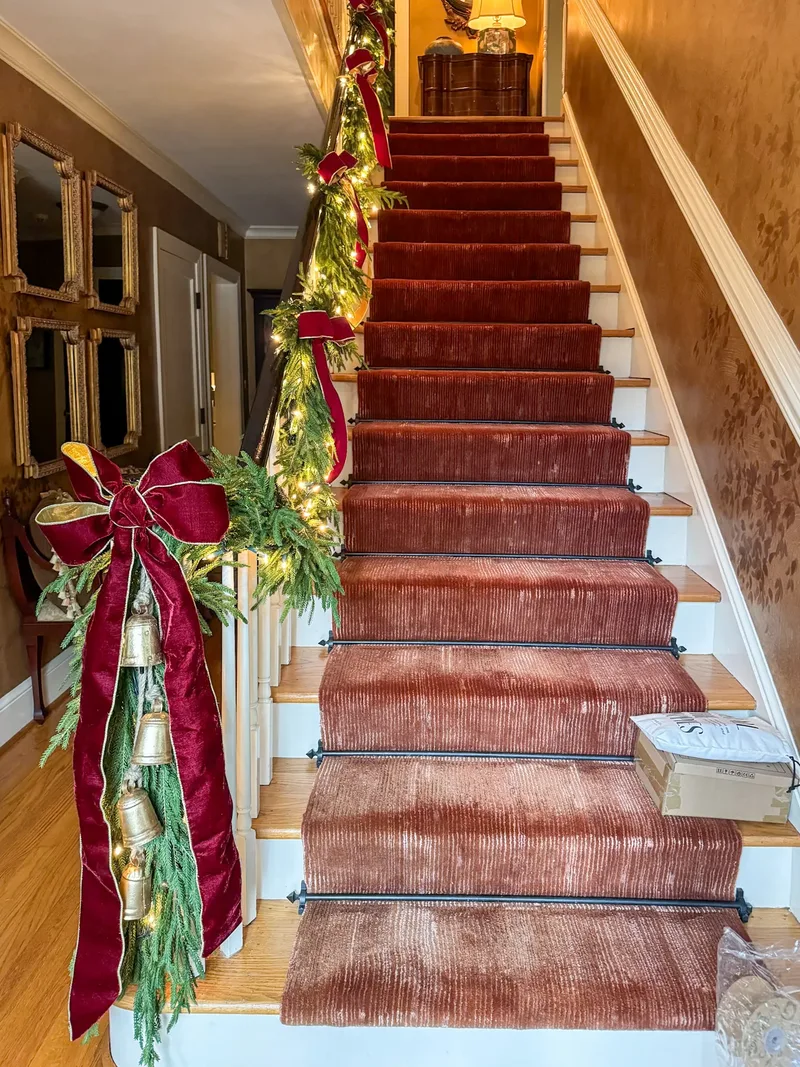 03
Garland measured to your banister, with deep swags, bows and light, fixed without a mark.
Explore Christmas staircases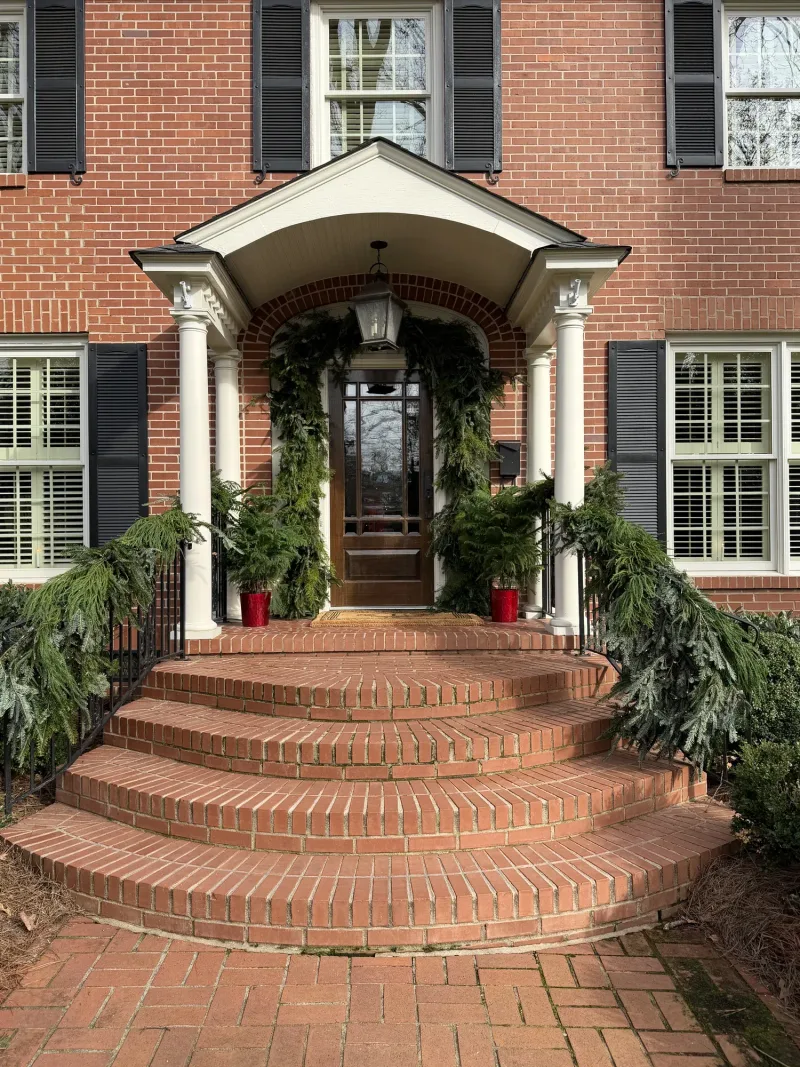 04
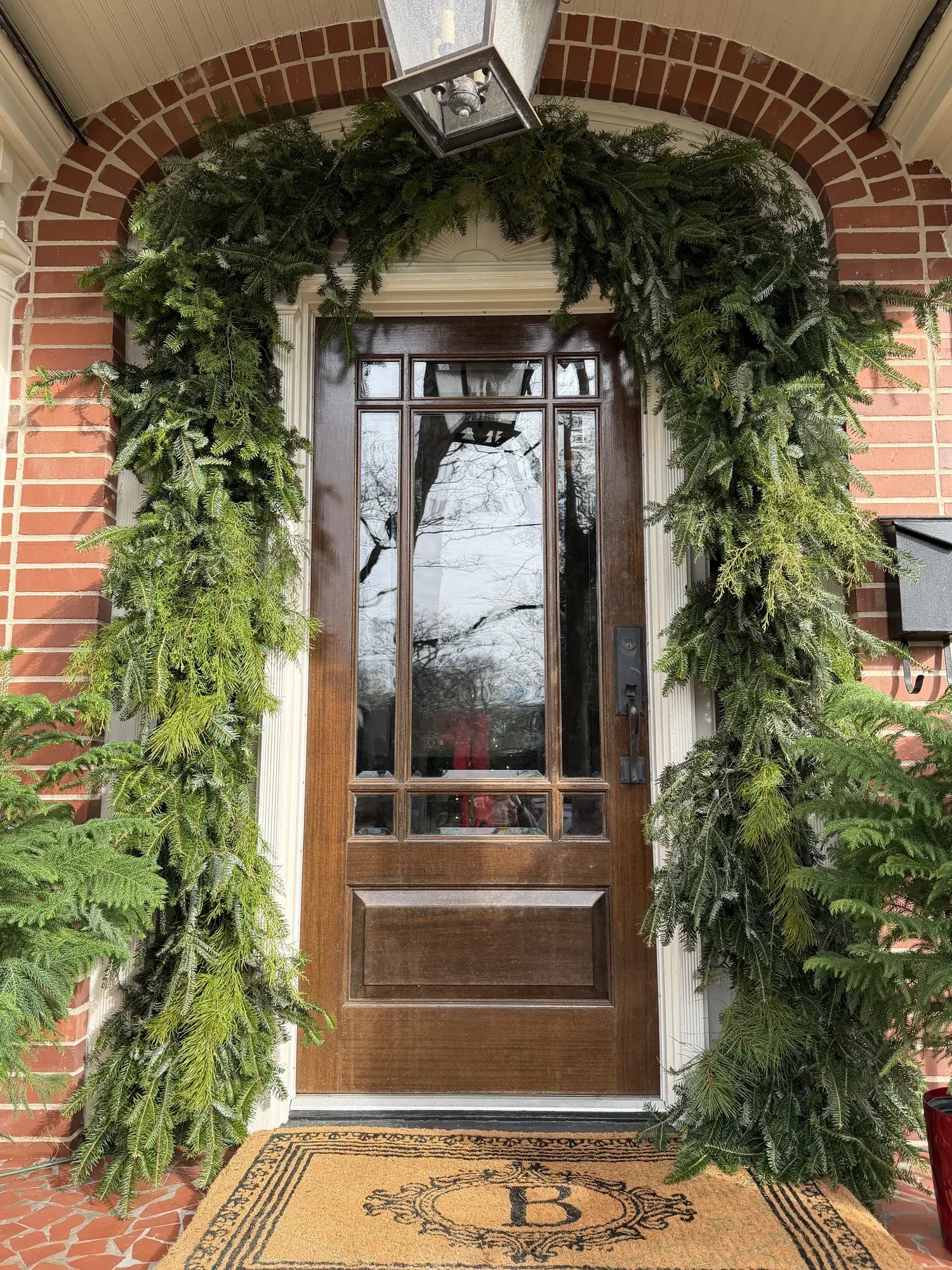
A London-inspired doorway: layered greenery and warm light around the door, built for the weather.
Explore Christmas porches 05
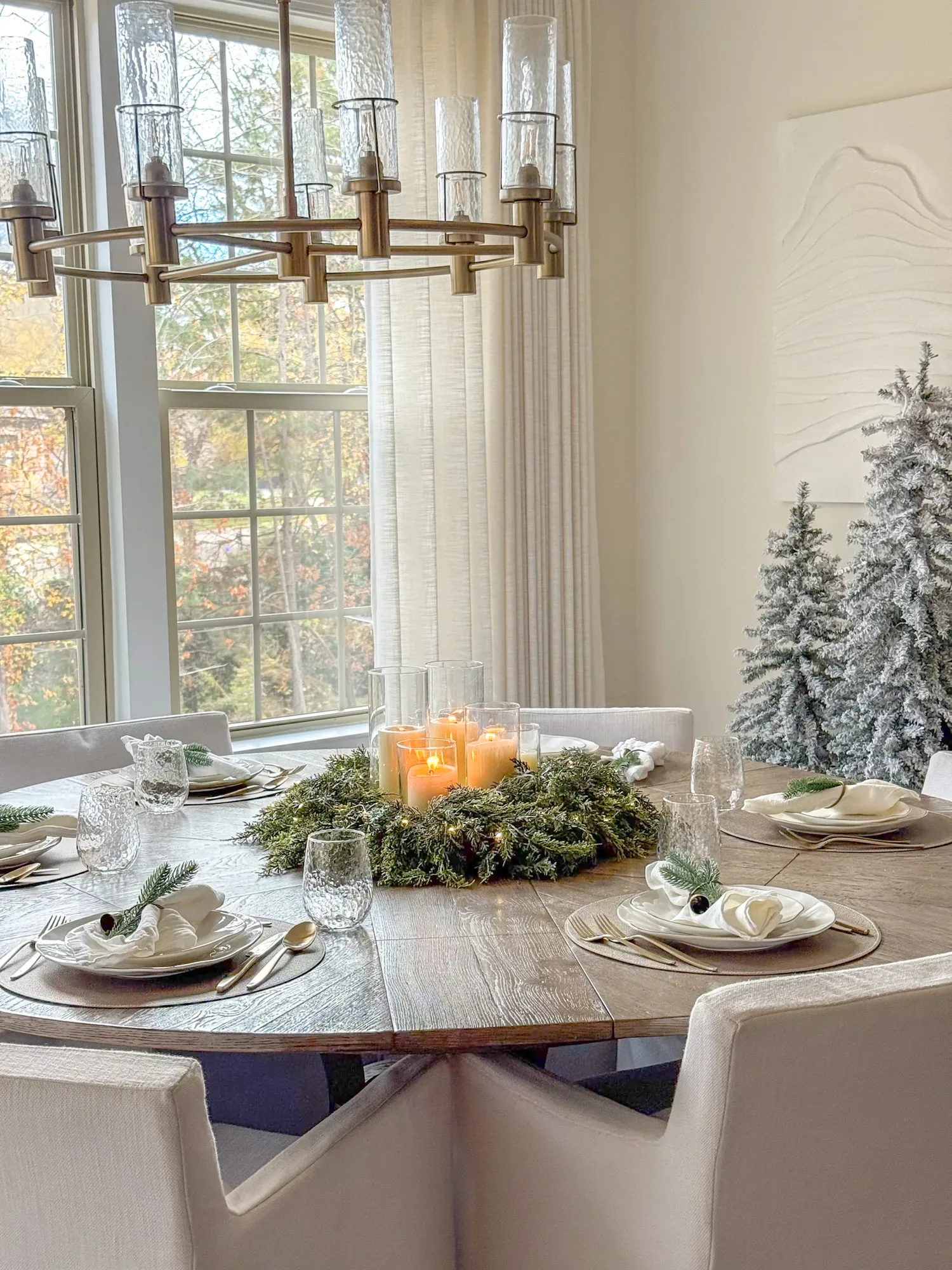
A Christmas table set the day before, built around the dishes and linens you already own.
Explore Christmas tablesThe whole home
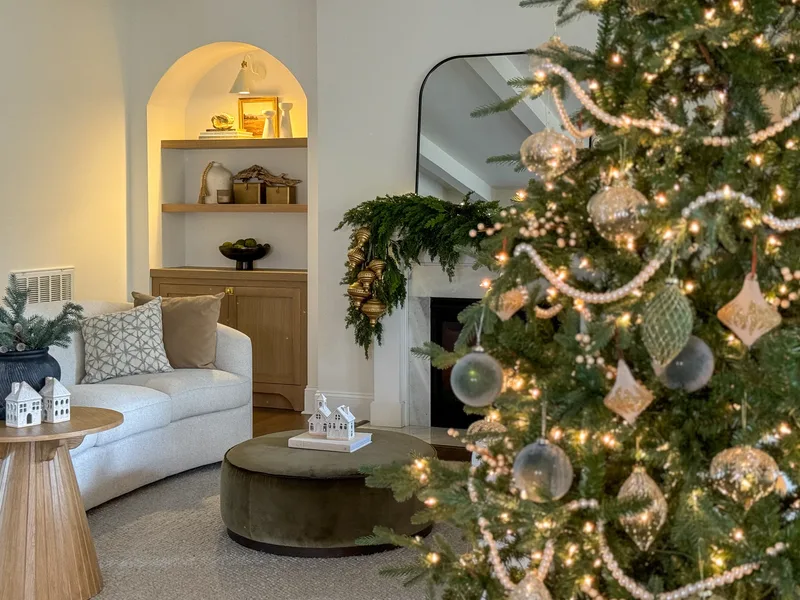
Christmas shouldn’t stop at the tree. I’ll carry one direction through the mantel, the staircase, the entry, and the rooms you actually live in—so the whole house reads as one thought instead of four good ideas.
Who it suits
You host through December and the house needs to be finished before the first guests arrive, not by the third weekend of trying
You have a two-story entry, tall ceilings or a long staircase—the features that look wrong at store-bought scale
You have years of accumulated boxes and no palette to sort them against
You would rather not spend December on a ladder, and would rather not spend January taking it all down
How it runs
Send me which rooms you have in mind and roughly when you want the house finished. Dates are held in the order they are booked, and entrances go first because they need the most material and the longest install window.
We look at the spaces together, in person or on video. I measure ceilings and sightlines, we go through what you already own, and we agree the scope, the palette and the budget before anything is ordered.
I order what is missing, sort through your existing boxes, and prepare greenery, ribbon and lighting ahead of the visit. You are not asked to shop, compare or return anything.
Installation and removal are both part of it. I install everything in one visit and take the packaging with me. In January I come back, remove it all, and pack it labeled by room, so next season starts from something organized rather than from a garage full of loose bags.
What it costs
There is one price, and I give it to you after the walkthrough, once I’ve seen your rooms. It covers the design, the materials, the installation, and the takedown in January.
I don’t publish prices, because the same request can cost very different amounts from one house to the next. What decides it is the house itself:
From my own home and my clients’
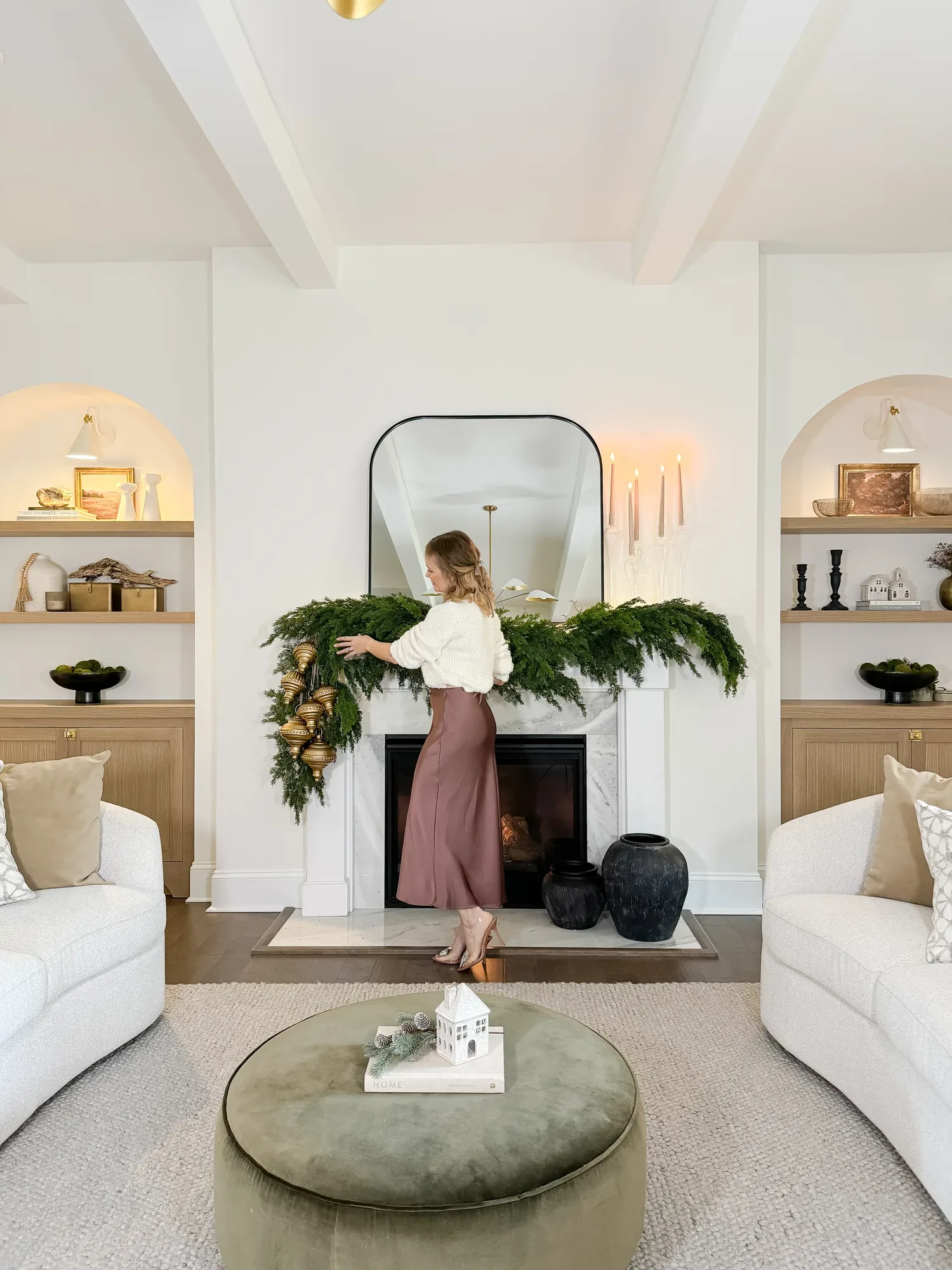
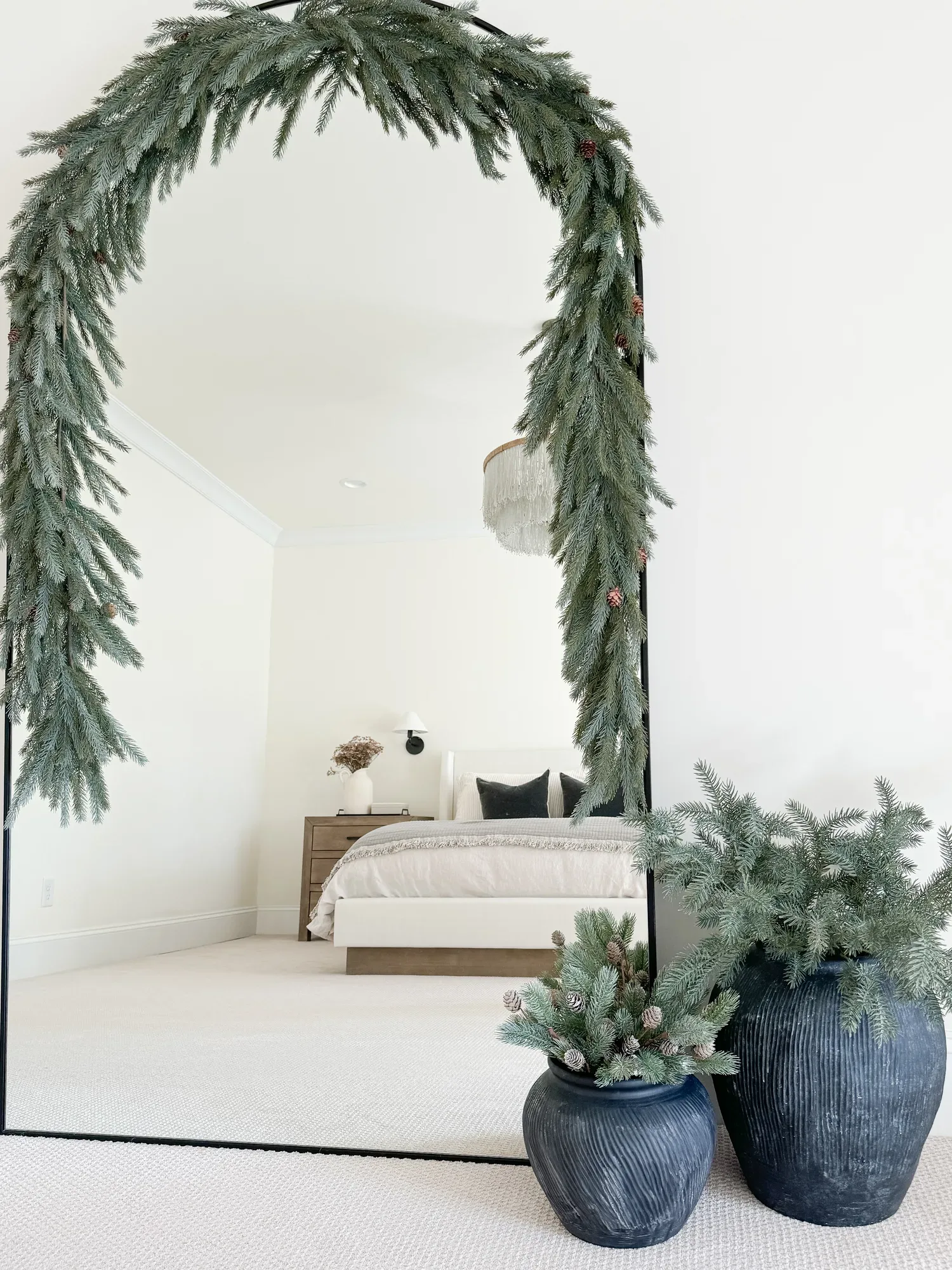
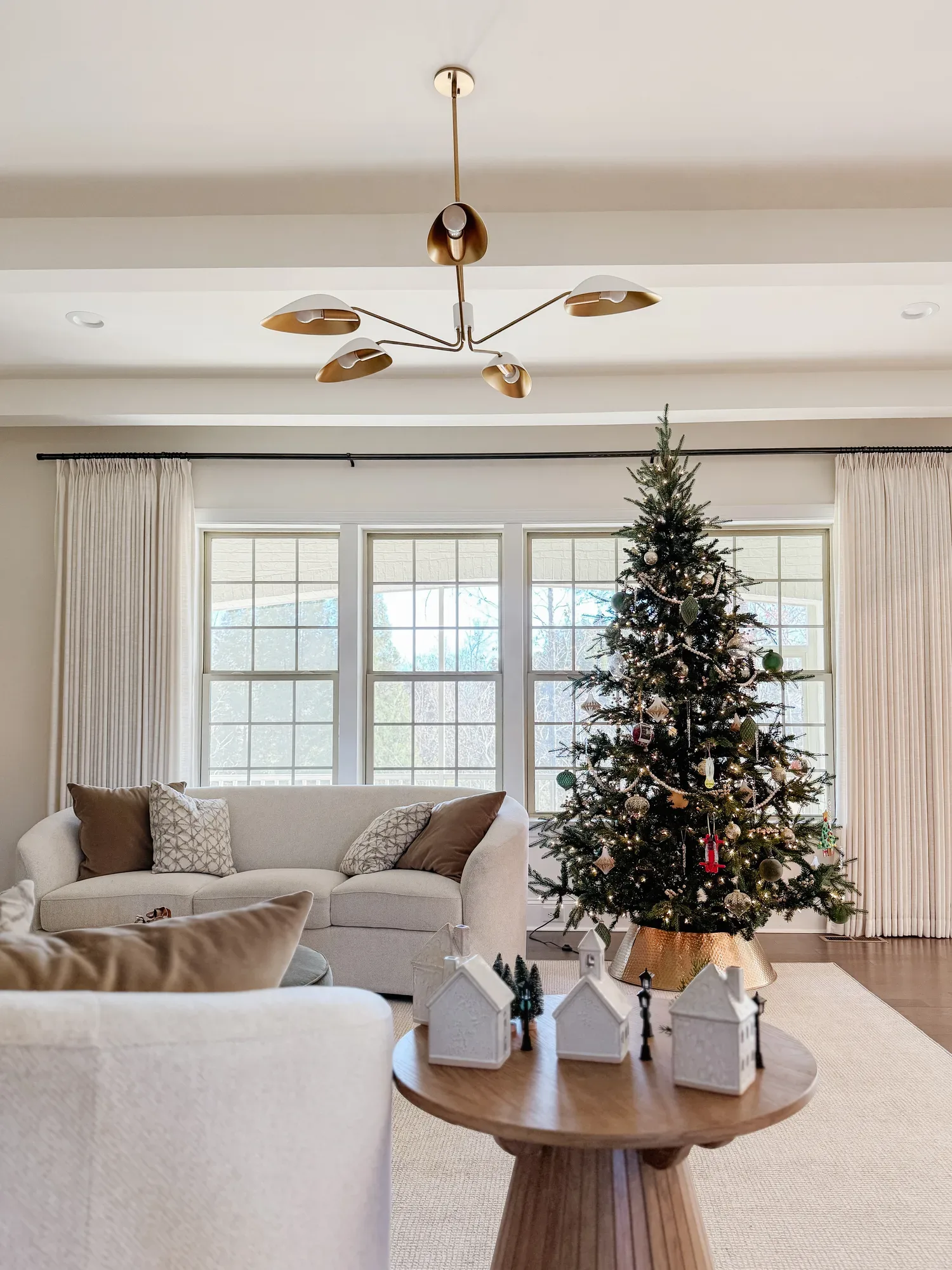
What clients say
“I can’t recommend Tanya enough. We worked with her during our home build, and she was absolutely incredible from start to finish. She’s not only patient, but truly listens and understands your vision, which made such a difference for us. One of the most overwhelming parts of building our home was choosing lighting for every single room, but Tanya guided us through it so thoughtfully. She has an amazing eye, gave us practical advice, and helped us make decisions with confidence. What could have been a stressful process actually felt easy with her help. I’m so grateful for her guidance, expertise, and all the little tips she shared along the way. She made a huge impact on our home, and I would work with her again in a heartbeat.
“Great service, very knowledgeable and patiently supported us along the way. This home project was very tedious and scary too. Esp if you’re not good with choosing colors. If you’re like us then Tatyana is your gal, our family was glad we went with her. Our home came out great and we love it. God bless and more power!
“Amazing designer! Very creative, easy to work with and delivered exactly what i was looking for. Would definitely work with her again. Even after our consultation, she let me know I could text her if I had questions or needed help with her suggestions. That level of care made a big difference.
“Tatyana was absolutely amazing to work with! She helped me design both our living room and bedroom, and completely transformed the feel of our home. She made choosing paint colors, furniture, and layout so easy — I would have been so overwhelmed without her guidance! If you’re in Waxhaw or Charlotte and need help pulling your home together, I highly recommend booking with Your Designer BFF!
“We had the pleasure of working with Tatyana on a new construction build. Her guidance was instrumental in helping us make the correct design decisions to make the home functional and beautiful. She was fantastic to work with and very easy to communicate with. Thank you for your hard work and dedication. Your contribution to our project is truly appreciated.
“Tatyana has been a pleasure to work with. She was very professional in helping me design the exterior of my new home. She was always very quick to respond and always got her work done on time. I would highly recommend her!
“Tatyana was very professional and provided excellent service! She was prompt with her visits, and her responses to texts. She had great ideas and helped me think outside the box. She also had many trades people she could recommend to me for work that needed to be done. I would highly recommend her.
“Great interior design company! They turned out ideas into stunning designs and additionally delivered on time and within budget! I would highly recommend to give them a try.
The Charlotte area
I decorate homes in Charlotte’s own neighborhoods, from Myers Park and SouthPark to Ballantyne, and in the towns around it, from Huntersville to Matthews and Waxhaw.
Before you book
It’s quoted after the walkthrough, as one price covering design, materials, installation, and takedown. What moves it is the number of rooms, how many trees and how tall, whether the porch is included, fresh greenery or faux, and how much of what you already own can be used. Fresh garland is a cost that comes back every year; faux costs more once and comes out of the box again each season, so which makes sense depends on whether you plan to book again.
Yes, wherever they still earn their place. Part of the walkthrough is going through your boxes together and being honest about what no longer works—usually tired lights, undersized trees, and ornaments from three different palettes. I source only what’s missing, and anything sourced for the installation is yours, so most of it comes back out the following season.
Either. The whole house is one booking, and the tree, the mantel, the staircase, the porch and the holiday table can each be booked on their own; each has its own page with what’s included. Everything is quoted after the walkthrough.
Installations are scheduled from October and the calendar fills in order of booking, so the practical answer is as early as you can decide. The right install date depends on when the house needs to be finished: if you host at Thanksgiving, that pulls everything forward by weeks. Entrance installations are the first to sell out each season.
It is done in one visit, with the packaging and debris taken away at the end. What takes the time beforehand is the sourcing and preparation, not the day itself.
Takedown is part of it. Everything is packed and labeled by room for storage, so next season starts from something organized rather than from a garage of unmarked boxes.
Whichever ones you actually use over the season, and the ones guests see first. Every room in scope is walked and measured, because a tree that is right for the family room is wrong for the entryway.
Ask early rather than late. Sourcing and preparation happen before install day, so a room added while the scope is still open is straightforward and one added the week of the install may not be.
Not as an installation. The design work travels, but the ladders, the fixing and the January takedown do not—so this service is Charlotte-area only. If you are elsewhere, a virtual consultation can cover scale, palette and a plan you or a local installer carries out.
Other ways to work together
 01
From the first idea to the final detail, I manage the design process so you can enjoy a home that feels cohesive, finished, and completely yours.
Available exclusively in the Charlotte area.
Explore Full-Service Design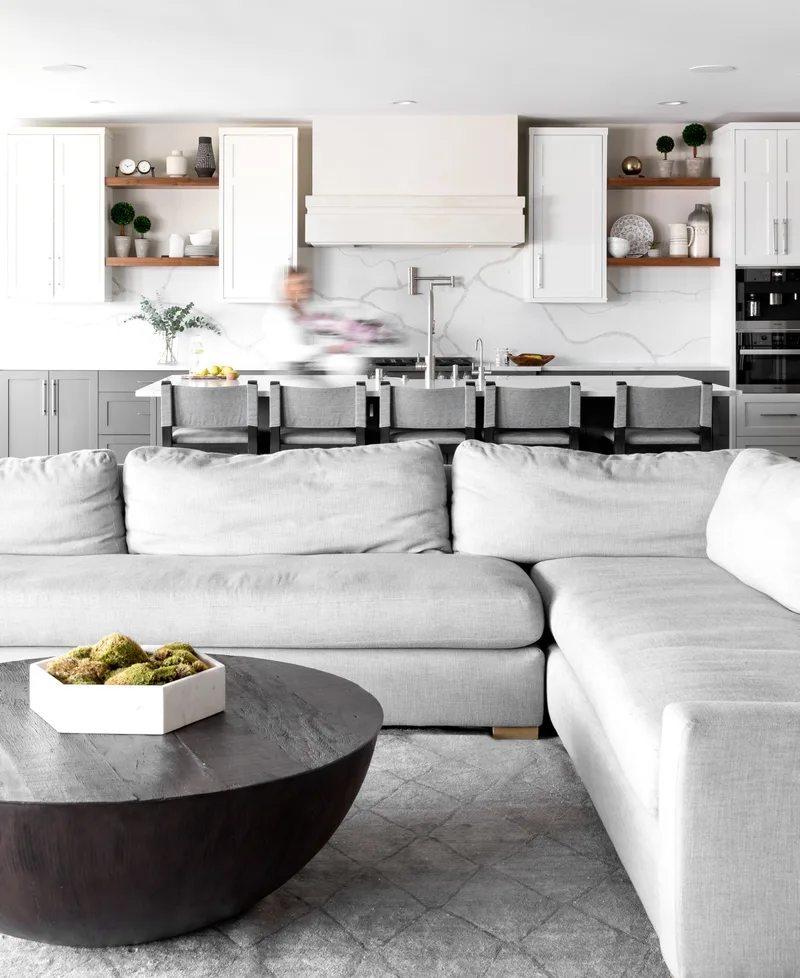 02
Make every permanent decision with confidence before construction begins—from cabinetry and tile to lighting and finishes.
Explore Kitchen & Bath Design 03
I’ll help you choose colors that complement your lighting, finishes, and surroundings—so your home finally feels cohesive from one space to the next.
Available in person in the Charlotte area or virtually nationwide.
Explore Paint Consultations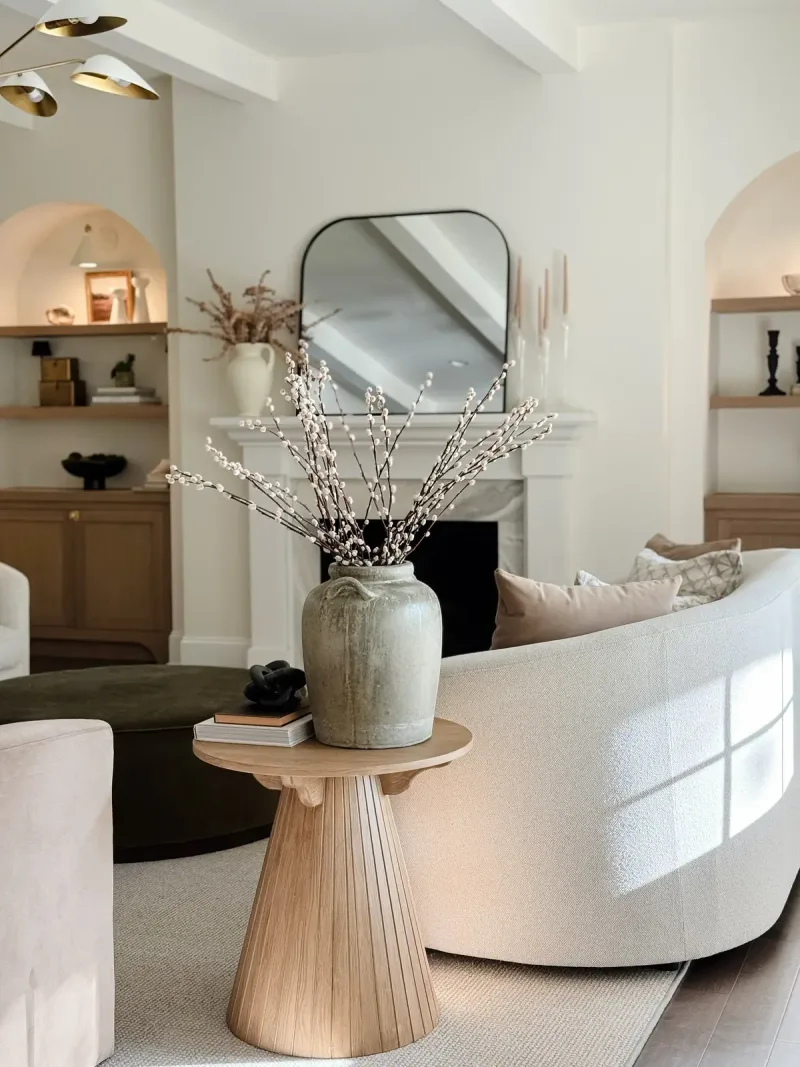 04
Turn an unfinished room into a space that feels complete.
I help you select the right furniture, lighting, and finishing details to bring everything together.
Explore Furniture & Room Design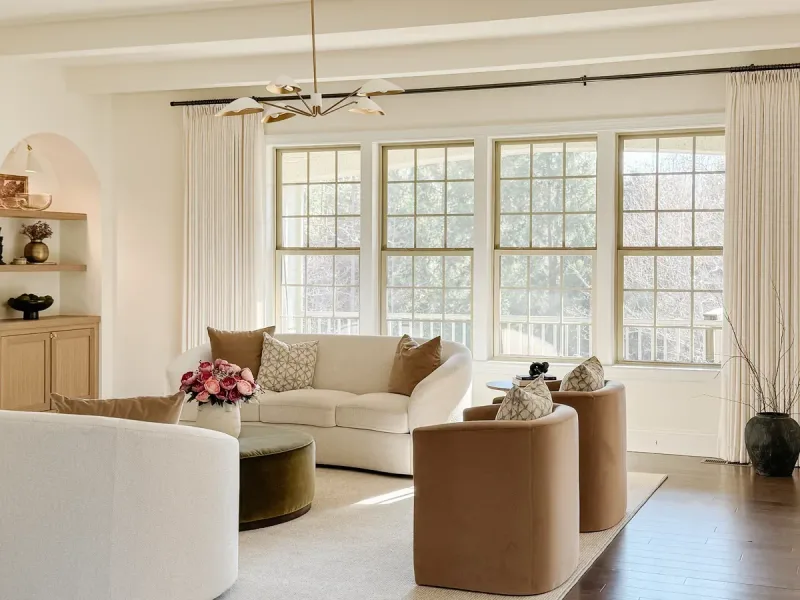 05
During a focused consultation, we’ll work through the decisions keeping you stuck and create a clear direction you can confidently follow.
Available in person in the Charlotte area or virtually nationwide.
Explore Design Consultations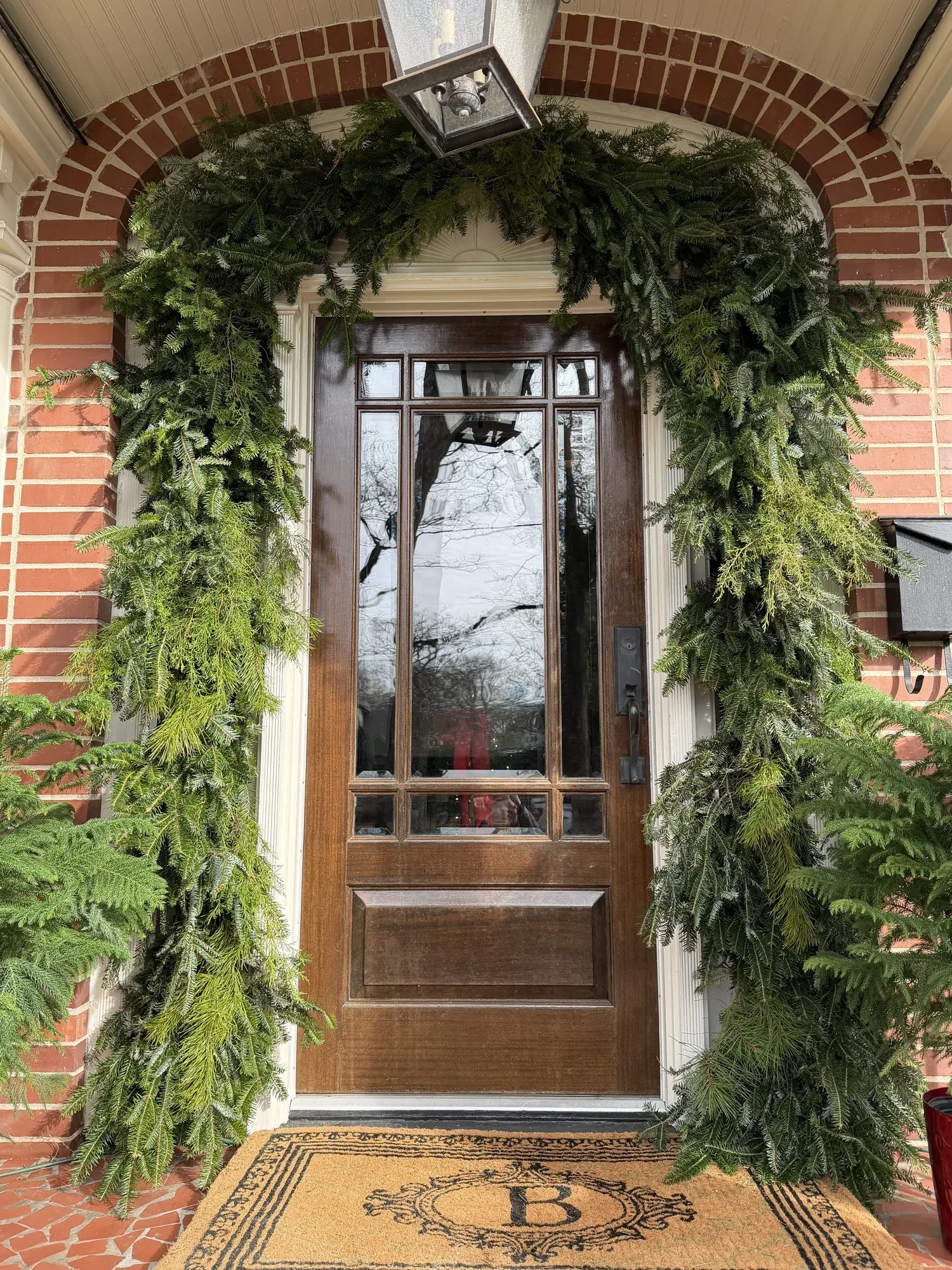
Let’s make your next decision the easy one
Tell me what you’re working on, and let’s choose the right next step together.
Let’s talk about your home
Ready to share the details? Complete the project inquiry form, and I’ll recommend the best next step.
Prefer to talk first? Book a free 15-minute call to ask about my services and see which option fits your project.

Not sure which service you need?
Book a complimentary 15-minute Project Fit Call to briefly share what you’re working on, ask questions about my services, and determine which option best fits your project.
Book a Free 15-Minute CallYou only need to choose one—submit the form or book a call.
Planning the season
Christmas decorating has a particular way of going wrong. Not badly — just slightly, in about nine places at once. The tree is a foot too short for the room. The mantel garland is beautiful for the first three feet and then runs out of ideas. The porch has a wreath on the door and nothing else, so the entrance reads as an afterthought. And in January it all comes down into unlabeled boxes, which is a problem you inherit from yourself eleven months later.
Christmas decorating, the way I do it, treats the house as a whole for the season: trees, mantels, staircases and doorways designed for your actual rooms, sourced, installed in a single visit, and taken down and packed by room in January. Here's what that involves, when to plan it, and what makes the difference between decorated and designed.
Almost every seasonal mistake is a scale mistake, and trees are where it shows most.
The rule I use: leave 8 to 12 inches between the top of the tree and the ceiling, and remember the topper eats most of that. In a room with 9-foot ceilings that means a 7.5-foot tree; with 10-foot ceilings, a 9-foot tree. In a two-story great room — which around here is very common — a 7.5-foot tree looks like a houseplant. Those rooms need 12 feet or more, or a different approach entirely: a tall, narrow tree flanked by lit branches, so the vertical volume is answered rather than ignored.
Width matters as much as height. A slim tree suits an entry or a dining corner; a full-profile tree needs floor space around it to be seen properly. The number people never think about is the stand-to-wall distance — a full 9-foot tree wants about 30 inches of clearance behind it, which changes where furniture sits for six weeks.
| Ceiling height | Tree height | Approx. lights | Notes |
|---|---|---|---|
| 8 ft | 6.5–7 ft | 500–700 | Slim profile if the room is tight |
| 9 ft | 7.5 ft | 800–1,000 | The most common Charlotte main-floor tree |
| 10 ft | 9 ft | 1,000–1,300 | Full profile earns its space here |
| 12 ft+ | 12 ft or a designed alternative | 1,500+ | Two-story rooms; a short tree reads as a mistake |
| Entry / dining corner | 6–7 ft slim | 400–600 | Depth matters more than height in a walkway |
On lights: 100 per foot of tree is the old rule and it's roughly half of what looks good. Aim closer to 150 per foot, wrapped into the interior of the branches as well as the tips — light coming from inside the tree is what gives it depth instead of a lit outline.
The season is not an exemption from the rest of the house. A scheme that fights the room it's in reads as clutter no matter how good the individual pieces are, which is why every project starts with a written scope and palette: greenery type, ribbon, ornament finishes and lighting temperature, agreed before anything is sourced.
Two decisions do most of the work. First, warm white lights or cool white — and then that choice is held consistently through the whole house, because two temperatures in one sightline is the seasonal equivalent of mixing whites. Second, the metal: whether the ornaments and accents run gold, silver, or a soft bronze. Picking one and letting it dominate is what makes a mixed collection look collected rather than accumulated.
Working with the house's existing palette matters too. Deep reds sit beautifully against warm neutrals and fight a cool gray room, which is worth knowing before you buy forty ornaments in one family. If you'd like the underlying palette sorted properly, that's the paint consultation, and the dark greens piece is relevant if you're drawn to a richer backdrop.
It's looked at honestly and used where it still earns its place. Ornaments with history stay — those are the point of the whole exercise. What usually gets retired is the filler: the faded picks, the garland that's shed half its needles, the ribbon that was a different color three years ago.
Anything missing is sourced, and it's a shorter list than most people expect once the palette is settled, because a large part of what looks wrong is inconsistency rather than absence.
Earlier than feels natural. Sourcing and preparation happen well before install day, and the good material — particular ribbon, specific ornament finishes, quality faux greenery — sells out in autumn rather than in December. A room added while the scope is still open is straightforward; one added the week of the install may not be possible.
Installation itself is a single visit, with packaging and debris taken away at the end. What takes the time is everything before it. Takedown happens in January, with everything packed and labeled by room for storage — which means next season starts from something organized rather than from a garage of unmarked boxes.
Label by room, not by type. "Family room mantel" is a useful label; "garland" is not, because in eleven months you won't remember which garland went where.
Photograph each finished room before takedown. It's the fastest possible brief for the following year, and it's free.
The honest answer is both, placed deliberately.
Real greenery smells like the season and nothing replicates that. It also drops, dries and browns — fast in a heated room, faster above a working fireplace, and unpredictably on a porch through a warm December week. Fresh garland on an interior stair rail typically looks its best for two to three weeks with regular misting, less if the house runs warm.
Good faux holds its shape and color for the whole season and improves every year that the manufacturing does. Bad faux is unmistakable, and the tell is uniformity: identical needles, one flat green, and a stem that reads as plastic where it meets the branch. What separates the two is variation in needle length and tone, and a wire core you can actually shape.
If you're choosing a faux tree yourself, the same test applies as for any faux greenery, and the piece on choosing a faux olive tree covers what separates convincing from obvious.
The approach that works: faux as the structure — the garland, the wreath base, the porch installation — with fresh elements worked in where they'll be seen and smelled and can be refreshed. Cedar, eucalyptus and a few fresh stems in an entry arrangement give you the scent without staking the whole season on something perishable.
Ribbon is the fastest way to make a scheme look current or ten years old, and it's a small part of the budget.
On a tree, ribbon worked in vertical cascades from the top reads more considered than horizontal wrapping, and it's far easier to adjust. Cut the lengths longer than you think — a tail that ends abruptly looks cut, and one that curls into the branches looks placed.
Seasonal lighting is the same discipline as any other lighting: temperature consistency, layers, and control.
Pick warm white or cool white and hold it across the whole house. Warm white sits comfortably with the interior lighting most homes already have; cool white reads crisper and more contemporary but fights warm lamps in the same sightline. Mixing them is the most common seasonal lighting error, and it's visible from the street when it happens on an exterior.
Put everything on timers, indoors and out — nobody keeps plugging things in by mid-December, and an installation that's dark half the evening may as well not be there. Outdoors, use outdoor-rated cords and an outdoor-rated timer, keep connections off the ground and out of standing water, and plan the power route before the greenery goes up rather than after. Indoors, keep cords off walkways and away from anything that swings.
A tree lit properly and a porch lit properly will do more for the house than another six boxes of ornaments. Light first, then decorate.
The ones you actually use over the season and the ones guests see first — commonly the entry and porch, the main living room, the dining room and the staircase. Every room in scope is walked and measured, because a tree that's right for the family room is wrong for the entryway, and a mantel composition that works in a tall room looks overloaded in a low one.
Send:
If the entry is the part that bothers you most, The Warmest Welcome is a doorway project worth a look.
If the rooms themselves need work before they're worth dressing, full interior design is the longer answer, and procurement handles the pieces. If you just want a second opinion on your own plan for the season, an hour on a virtual consultation will do it.
You can see seasonal work in The Magic of Coming Home for Christmas and A Fresh Start, Beautifully Reimagined, and the fireplace decorating piece covers the mantel principles above in more detail if you're doing it yourself.